Book Review: ‘All Hallows’ by Christopher Golden

Christopher Golden’s ‘All Hallows’ is my first read of 2026!

I started it in October 2025, but life got in the way of my usual reading habits. I managed to get back into it shortly after NYE, and then I tore through Golden’s eighties throwback novel.

And man, what a novel it was.

‘All Hallows’ follows a host of characters living along Parmenter Road, Massachusetts. The story takes place on Halloween, 1984. The evening starts with some domestic issues, which begin to escalate. And then the spooky bits sneak in while folks fight with adultery and other matters. From there, Golden takes us on a joyful 80s thrillride, with a few twists and turns that I didn’t see coming.

‘All Hallows’ felt like classic Stephen King in some ways, but not in a way that I’d call it a ripoff of style or anything. Golden writes with his own flair. The multicharacter, 80s vibe was reminiscent of King. Oh, and Golden’s willingness to kill off characters without a second’s warning. It felt dangerous, like any character we cared about could bite the bullet next.

If you enjoy ‘Stranger Things’ or King’s writing, I can 100% recommend ‘All Hallows’ by Golden.

I would love to read more from him; I’m excited to have discovered his writing.

⭐⭐⭐⭐⭐
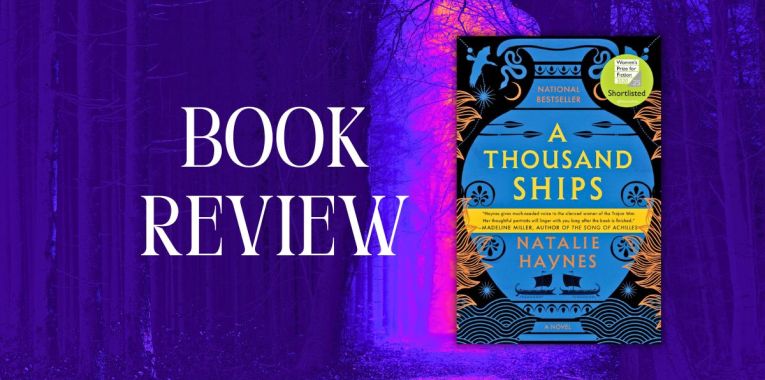
Book Review: ‘A Thousand Ships’ by Natalie Haynes

Greek mythology has never been my thing; every time I approached it, I ended up bored to death.

The books felt dry and longer than the Great Wall of China, like eating dust while hoping for a tasty morsel that never materialised. The same goes for any movie. If I had to choose between watching a film on this topic or not watching one at all, I know what I’d pick.

Enter Natalie Haynes. For my company book club’s Greek mythology evening, we chose one of Haynes’s books. ‘A Thousand Ships’ is a retelling of the Trojan War from the women’s perspective. I was apprehensive, to say the least. But the whole point of a book club is talking to others and reading books you wouldn’t have otherwise picked up. So, I dove in.

‘A Thousand Ships’ begins with a woman waking up to Troy falling, with everything on fire. It’s an explosive start that immediately hooked me. From there, Haynes hops forward and backwards in time, exploring the lives of women connected to the war. We see both Trojans and Greeks, each aching with loss and longing.

The book doesn’t follow one woman; it follows a whole cast. It feels less like a single novel and more like a collection of interlinked stories that form a complete whole. That’s why I enjoyed it a lot more than I otherwise would have. This format kept it fresh and fast-paced, ensuring it never dragged. The pages burn away. And each character is sympathetic, regardless of which side they stand on.

The best compliment I can give Haynes is that this is the first time I’ve ever taken an interest in Greek mythology. Her writing is crisp and fast-paced; it’s never a slog to get through. She always makes it easy to understand. And even with the array of characters, she makes it clear who we’re talking about and how the others relate to them. Some of those well-versed in mythology disliked aspects; for a newbie such as myself, it was great.

If, like me, this topic has never hooked you, don’t skip over Haynes’s book.

While I’m not going to devour more Greek books, I am interested in trying more of Haynes’s Greek retellings.

She does it well.

⭐⭐⭐⭐⭐

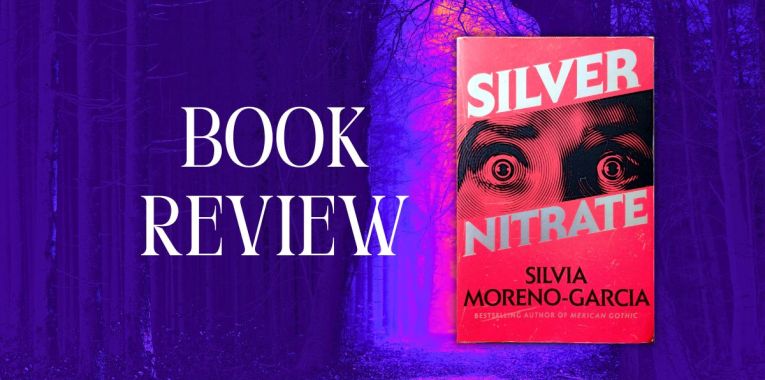
Book Review: ‘Silver Nitrate’ by Silvia Moreno-Garcia

Silvia Moreno-Garcia’s ‘Silver Nitrate’ is my latest read of 2025.

Moreno-Garcia first popped onto my radar with the release of ‘Mexican Gothic’ (which I’ve still yet to read). So, when I found ‘Silver Nitrate’ on the shelf, I grabbed it – and not only because that red cover oozes coolness.

‘Silver Nitrate’ follows Montserrat, an awkward sound editor. She’s in love with her childhood best friend, the washed-up actor Tristan. Together, they discover his new neighbour is a horror director from years past. For unknown reasons, he never finished his final film. Now, the director wants Montserrat and Tristan to help him complete it. Things go awry from there.

I had a good time with ‘Silver Nitrate’. The setting of ’90s Mexico is very cool and original. The childhood friends who always loved movies and horror resonated with me. And the idea of Nazi sorcerers is always creepy. The book is easy to read and doesn’t overstay its welcome. That said, I do have a few complaints.

I thought the genre was going to be horror when I went in. But, despite one or two scares (a couple of which were quite fun), the book itself isn’t terrifying. In fact, it wanders over to fantasy, sci-fi, and romance. I’d say it’s a romance novel wrapped in horror wallpaper.

Additionally, very few of the characters popped for me. Tristan, despite his interesting backstory, is whiny and annoying. Montserrat has her moments, but sometimes acts out for no clear reason. Abel was fun, as was the other guy who likes tropical décor (I forget his name). Speaking of forgetting, the main villains were all forgettable. We’ve all encountered these nefarious, lurking-in-the-shadows cult types before. Plus, there never felt like there would be any real repercussions if our heroes failed, only a vague ‘end of the world.’

These caveats didn’t stop me from enjoying ‘Silver Nitrate’, but they did make it disappointing. Judging by the cover and the blurb, this should have been a home run for me, yet it wasn’t. In the end, ‘Silver Nitrate’ didn’t quite cast the spell I hoped for. But it was fun enough to keep me curious about Moreno-Garcia’s other worlds.

I’m especially eager to check out ‘Mexican Gothic’.

⭐ ⭐ ⭐ ☆ ☆

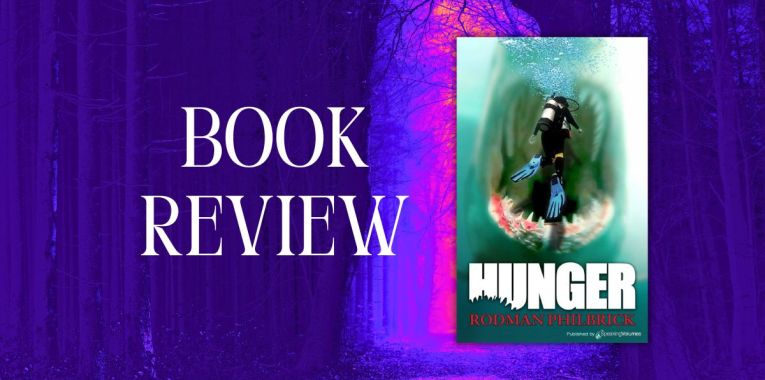
Book Review: ‘Hunger’ by Rodman Philbrick

Rodman Philbrick’s (writing as William R. Dantz) ‘Hunger’ is my latest read of 2025!

I am part of several horror reader circles, and the theme of aquatic terrors has come up. As a fan of movies like ‘Jaws’ and ‘Deep Blue Sea’, it piqued my curiosity. Someone recommended ‘Hunger’, saying it was like ‘Deep Blue Sea.’ It seemed like a no-brainer for a breezy summer read, so I was in. Yet, it took me a few minutes to find a copy. I didn’t know that ‘William R. Dantz’ was Rodman Philbrick’s pen name, or that newer editions bore his real name. But find it I did.

The setup is classic sci-fi horror. Six mutant sharks break out of their caged-in cove and escape to the deep blue sea. (See what I did there?) The lab that created these creatures goes into panic mode, scrambling to reclaim them. Meanwhile, a local couple running a dive boat have been caring for two dolphins that fled from the same lab. It doesn’t take long for the carnage to begin.

I had an absolute blast reading ‘Hunger’. I wanted a fun B-movie horror novel, and that’s what I got – a high-quality B-movie horror novel, at that. The chapters from the sharks’ perspectives are fantastic. Philbrick captures the thought processes of these intelligent, primal animals. There are also some creepy moments, like the photographer exploring a shipwreck. And the chapter ‘What a Father Does’ gave me goosebumps with its moving, emotional quality. That last one caught me off guard.

As I said in my review of Steve Alten’s ‘Meg’, do you judge a book against other books, or do you judge it for what it’s trying to do? This novel is not Stephen King’s ‘The Shining’, nor is it trying to be. It’s a book about a bunch of mutated sharks ripping things up in a gory, spooky mess. And in that regard, it excels.

Are you looking for a fun summer scare? Do you, like me, have a salachian obsession? (That’s ‘shark’ for those of you who didn’t grow up reading/watching anything with a dorsal fin on the cover.)

Well then, look no further than Philbrick’s ‘Hunger’.

⭐ ⭐ ⭐ ⭐ ☆

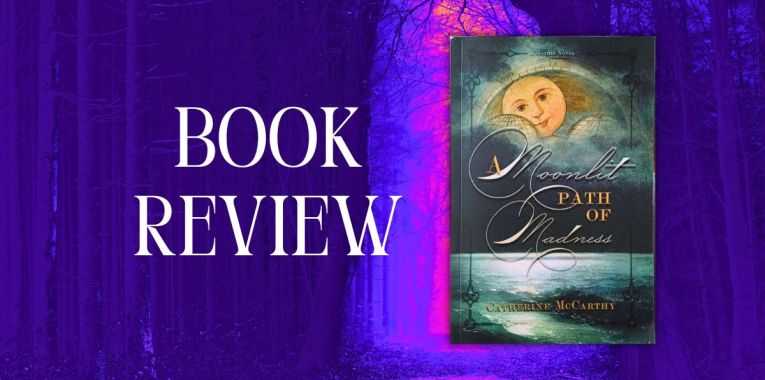
Book Review: ‘A Moonlit Path of Madness’ by Catherine McCarthy

Catherine McCarthy’s ‘A Moonlit Path of Madness’ is my latest read of 2025.

It took me a while to finish, but that’s not the book’s fault; life’s been chaotic. My wife gave it to me as a Christmas gift, along with a year’s worth of other books. And boy, does she know my taste in literature.

The story – set at the turn of the 20th century – follows Grace, whose mentally ill mother has passed away. Her brother inherits the family home in the US, where Grace lives with her servant. But her parents have left her another house on the Welsh coast. Hoping to leave her mother’s madness behind, Grace sets off for Wales to begin a new life. But escaping ghosts, real or metaphorical, is never that easy.

The story is dark and brooding, taking time to build the atmosphere. Being half English and half Welsh, I loved the damp, moisture-in-the-sea-air setting. You could almost taste the salt from the waves. Grace’s journey is haunting and relevant to our modern era. ‘A Moonlit Path…’ examines how we viewed mental health in the not-too-distant past. In doing so, the novel encourages reflection on how we face these issues today. McCarthy also creates a sense of fate’s inescapability, reminding me of Stephen King. It’s the type of story where you sense how it will end but hope things might turn out fine.

Haunting, beautiful, tragic.

If you enjoy slow-burn gothic fiction, this one’s for you.

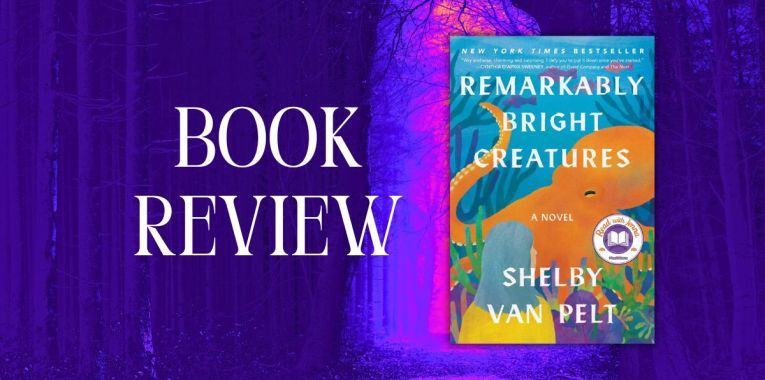
Book Review: ‘Remarkably Bright Creatures’ by Shelby Van Pelt

Shelby Van Pelt’s ‘Remarkably Bright Creatures’ marks book two of the year.

I’ve started a new job at a company that has a book club, and I was very much looking forward to joining. We’re discussing this book for our first meeting of the year, and I can’t wait to chat with everyone about it.

‘Remarkably Bright Creatures’ follows the paths of Tova and Cameron. Tova is recently widowed and lost her son many years ago. At night, she cleans an aquarium, where a Pacific giant octopus is the main attraction. Cameron grew up with his aunt and has never succeeded in life. He has never gotten his life on track since his addict mum abandoned him as a child. A series of events knock them out of their ruts, and the story unfolds like a flower blooming in the spring.

I loved this book. Slow and warm, it is a bit different from my usual fare, but it enraptured me. I challenge anyone not to have misty eyes at the novel’s end. As I started the book, I told my wife, ‘I’m pretty sure this is going to ruin me.’ The writing is witty and wise, and the characters – even exasperating at times – feel real. Even though the twist becomes clear early on, its execution still packs a punch.

It is a beautiful and original story; I recommend this to everyone.

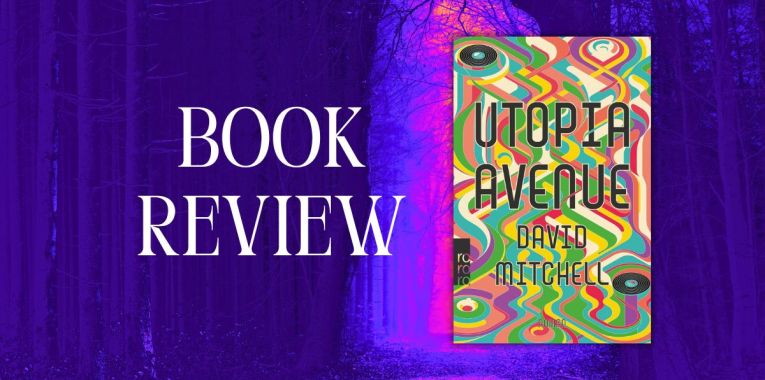
Book Review: ‘Utopia Avenue’ by David Mitchell

David Mitchell’s ‘Utopia Avenue’ is my next ‘sort of’ read of the year.

I say ‘sort of’ because I couldn’t bring myself to finish the book. I got a few hundred pages into it and realised I wasn’t having a good time. It took me a while to understand that I was not fond of the book because I’ve enjoyed Mitchell’s stuff before. I loved ‘The Bone Clocks’ and ‘Slade House’. Also, the book is set in the sixties, with which I have a semi-obsession. Enigmatic characters, such as Pink Floyd’s Syd Barrett, fascinate me. On paper, I ought to love ‘Utopia Avenue’.

And yet I didn’t.

It’s difficult to pinpoint why I wouldn’t say I liked the book. There are too many ‘main’ characters introduced in such a short time frame that you struggle to care for any of them. The book makes the swinging sixties – the hippie era – colourless and dull. There’s no straightforward story besides these folks coming together and making music. There’s no hook established in the chunk of the book I read. The name drops and cameos of famous bands and gigs feel goofy. And not in a good way.

I found the book rather exasperating because I could have loved it. I should have loved it.

Or, instead, Mitchell should have made me love it.

Book Review: ‘Stasiland’ by Anna Funder

Anna Funder’s ‘Stasiland’ – a book club book – was my next read of the year.

As the title suggests, ‘Stasiland’ is a nonfiction book about East Germany during the GDR. What sets it apart is the perspective of its Australian author, Anna Funder. Funder visited Germany after the fall of the Berlin Wall. She found and interviewed people who lived during that era, including Stasis. ‘Stasiland’ weaves the interviewees’ and Funder’s stories together, as she navigates new Germany.

The book is informative and engaging. Considering its location in recent history, the material packs a punch and is weighty. Reading it, I learned a lot about this period. Hearing people’s opinions on both sides – for and against the division – was fascinating. The stories were breathtaking, the tension incredible, and many moments squeezed the heart. People can be so depraved and evil. People can be so brave and good. These people can live shoulder to shoulder.

While I can’t say that I ‘enjoyed’ this book in the traditional sense, it was riveting. The material is grim, but it’s not meant to be a fun read. It’s an educational journey through an unpleasant moment in time. It’s a book that will leave you with a deeper understanding of Germany’s history.

If Germany’s narrative over the last century interests you, I recommend ‘Stasiland’.