Book Review: ‘Es wächst und wächst und wächst…’ by R. L. Stine

R. L. Stine’s ‘Es wächst und wächst und wächst…’ is my penultimate read for my 2024 reading challenge.

I decided to pick up another after reading a few Goosebumps books in German to help me learn the language. I needed something easier after struggling with ‘Der kleine Prinz’ earlier in the year.

The book follows Evan, a boy whose parents left him with his old aunt as they leave town searching for a new house. Evan, who is very reluctant to do this, brings along his best pal, an old dog named Trigger. He soon meets a young girl of the same age named Andy, who shows him a dusty old toyshop with an irascible owner. The pair discover a strange tin with the word ‘Monsterblood’ (‘Monsterblut’) on the label. But, upon purchasing this treat, Evan learns it does not stop growing.

The story is classic Stine – fun, with likeable characters and easy-to-hate bullies. The book has plenty of peril, but you always know the heroes will get out of it (although, as a kid, I didn’t know this!). As my friend promised me upon gifting me ‘Der kleine Prinz’, I found the German in this book much more accessible. Some bits were tricky and required a dictionary, but I got through it. It’s getting more accessible – I’ll move on to the Fear Street novels in German soon.

‘Es wächst und wächst und wächst…’ is a great horror book for kids and is an excellent book to help adults learn a new language.
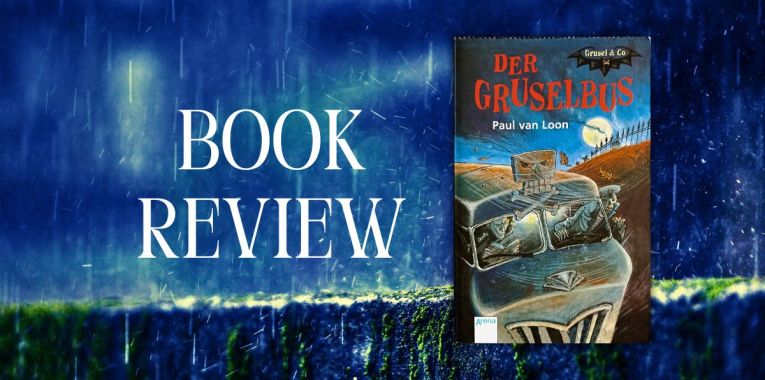
Book Review: ‘Der Gruselbus’ by Paul van Loon

Paul van Loon’s ‘Der Gruselbus’ is my next read of the year.

I started reading this in time for Halloween, in my quest to better my German skills. The German in this book was trickier than in R. L. Stine’s ‘Goosebumps/Gänsehaut’ books. But it wasn’t too difficult to the point of incomprehension.

The story follows a class of children and their teacher as they embark upon the titular bus. A driver in a skeleton costume and a strange man on this bus greet them. The stranger is a writer with ten strange objects and a short story to go along with them. Between each tale, the tale of the children on the bus—hearing these stories—progresses. It’s all quite meta, especially for a children’s book.

I had a blast with this book. It’s the most entertaining book I’ve read in German so far. Despite the intended audience, some tales are bleak and gruesome. They had me on the edge of my seat—quite a feat for a kid’s book. The fact that the book consists of several stories, each about ten pages or so, keeps the book feeling fresh. It helps when reading a book in a foreign language.

I would read other books from Paul van Loon in the future.

On to the next German book!

Book Review: ‘Rätsel um das Schneemonster’ by Thomas Brezina

Thomas Brezina’s ‘Rätsel um das Schneemonster’ is my next German read of the year.

My friend Bernie found out I was reading children’s books in German to improve my language skills. The kind soul he is, he donated a small library’s worth of kids’ books to me in my quest to speak the language. My first pick from these stacks of books was Brezina’s first Kinckerbocker-Bande book.

People have told me that these books mix Scooby-Doo with Austrian culture. And, what’s more, Brezina wrote these books in German. R. L. Stine’s Goosebumps books need translation, which sometimes makes for odd wording.

‘Rätsel um das Schneemonster’ follows the kids as they meet for the first time. Each child has won a drawing contest, drawing them together for the awards ceremony. But the man running the competition seems odd. And there are reports of a monster on the ski slopes of Tirol. The children investigate, like Mystery Inc in Scooby Doo. The plot is more complex, and the peril is sometimes more significant.

I found the German in Brezina’s book a bit trickier than in the Goosebumps books, but still manageable. Plus, increasing the difficulty to aid the learning process is good practice. Yet, that doesn’t mean I’ve moved on from Goosebumps. One thing I missed about Stine’s work was his monsters were real and not a man in a mask.

I can say that I enjoyed ‘Rätsel um das Schneemonster’ and look forward to reading more of Brezina’s work.

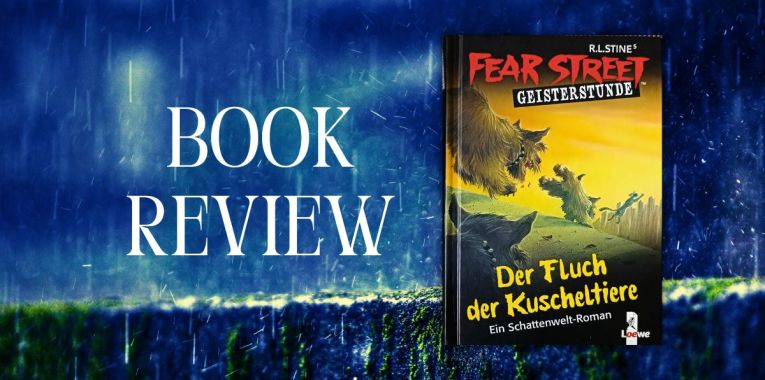
Book Review: ‘Der Fluch der Kuscheltiere’ by R. L. Stine

R. L. Stine’s ‘Der Fluch der Kuscheltiere’ is book thirty-one of the year.

I’ve lost track of the number I’m at for German book reads now, but that’s good. When asked, ‘How many books in German have you read?’ I can now answer: ‘Several.’

As usual, I had a blast with Stine’s kid-focused horror. This book follows Greg and his friend Liv as they go trick-or-treating on Halloween. My favourite time of year! Greg leads Liv into the dreaded Shadyside to one-up his nemesis in the candy collection. There, they find a house with a strange young boy and an even stranger older woman, who turns out to be a witch. They walk away with an enchanted bag that copies whatever you put inside tenfold. Dreams of money and candy float around the kids’ heads, but chaos isn’t far away.

Like most of Stine’s work, the horror is tame because of its target audience. Yet, one section in this book gave me the creeps: the cockroach section! It was pretty terrifying. I can only imagine how much that would freak little kids out—well, got to give them a genuine scare now and then, right? Great stuff.

On to the following children’s book in German!

Book Review: ‘Die Rache der unheimlichen Puppe’ by R. L. Stine

R. L. Stine’s ‘Die Rache der unheimlichen Puppe’ is book twenty-six of the year.

I also read this on my honeymoon, along with a yet-to-be-finished King novel. If I want to keep progressing with my German language skills, I shouldn’t stop for a holiday!

The story follows Jessica and her friend. The pair aim to host children’s birthday parties for some much-needed cash. Meanwhile, Jessica’s younger twin sisters and their creepy ventriloquist dummy are causing havoc. And when a second dummy enters the picture, there’s no telling what will happen.

As with the previous Stine books, the threat is mild because the story is for children. Yet, there are some genuine scares, and the ending is quite a brilliant cliffhanger. Stine knows horror through and through, making him the master at aiming it at kids. It’s neither terrifying nor boring; a fine line to tread.

I’ll be reading another ‘Gänsehaut’ in German post haste!

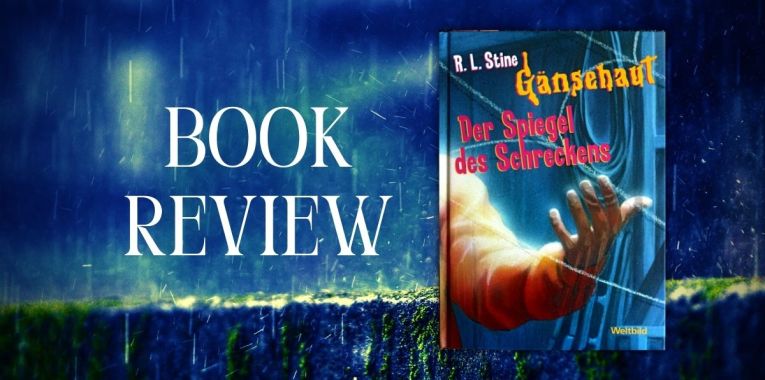
Book Review: “Der Spiegel des Schreckens” by R. L. Stine

R. L. Stine’s “Der Spiegel des Schreckens” is my twentieth book of the year and my third German book ever.

I decided to continue with my run of “Goosebumps”/”Gänsehaut” books—if it works, why change it? Furthermore, R. L. Stine aimed these books for ten-to-twelve–year-olds, and I loved them as a kid. Hence, they are perfect for me in my quest to learn German.

The story follows two boys and their friends as they discover something in the attic. The object is a mirror that grants whoever pulls its lamp cord the power of invisibility. But the longer the kids stay invisible, the stranger they feel.

There’s no death or injury—it’s a kids’ book!—but the implication of the cursed object is quite creepy. Even so, I had a blast with the book, and I look forward to reading my next “Gänsehaut” book on my honeymoon! (Along with my usual stack of English books, of course!)

Each book I read in German gets a bit easier, and I’m having fun reliving my childhood as I do it.

Book Review: “Willkommen im Haus der Toten” by R. L. Stine

R. L. Stine’s “Willkommen im Haus der Toten” is my next read of the year.

I had so much fun with “Das unheimliche Labor” that I read another “Goosebumps” book. And, much like that other “Gänsehaut” book, I had a blast. It’s great to remember how you felt reading this stuff as a kid.

“Willkommen im Haus der Toten” opens with a family moving to a new house called Dark Falls. Ooh, spooky! But things start to feel off for the children, a girl and her younger brother. Their dog runs off and disappears. Other strange children appear in the household at creepy moments. And what of those new friends they’ve made?

Fun and childish, this “Goosebumps” book is what I expected. Like the previous one, some bits were beyond my current German skills. But I always had a general feeling about what was happening, even if I struggled with the odd paragraph.

I’m off to start another “Gänsehaut” book!