Book Review: ‘The Mist’ by Stephen King

After my previous read, I reread Stephen King’s ‘The Mist’ as a palette cleanser for my next book of the year.

‘The Mist’ is a shorter book, perfect for my current mood. I needed something to remind me that I can enjoy reading when the writing style matches my reading style. Some things click with you; some things don’t.

And King very much clicks with me.

The story follows Dave and his son, “Big” Bill, in the wake of a storm for the ages. Trees have fallen, and wooden piers have sunk. Cars and garages have suffered damage. And an odd mist is creeping in over the lake. Dave heads a small group into town to pick up supplies for the next few days without power. They leave Dave’s wife and Bill’s mother alone at the house, which has suffered a smashed-in window. But whilst in the local supermarket, the mist closes in and traps them inside.

And there’s something awful in the mist.

I will keep the details of the story secret. You should read it (or watch the movie—it’s fantastic) and find out for yourself. But I recommend starting with the book and moving on to the film. I will say this for the film: it surpasses King’s ending on paper here. (Although that’s not to say that King stumbles on the landing.)

King’s style makes the short novella—a little under 200 pages—feel like a pamphlet. The pages fly by, making you wish he’d turned it into a full-length novel. He has the gift, after all. But, then again, King might have chosen this format for a reason.

‘The Mist’ is a short, sharp jab to the dome; it packs a punch.

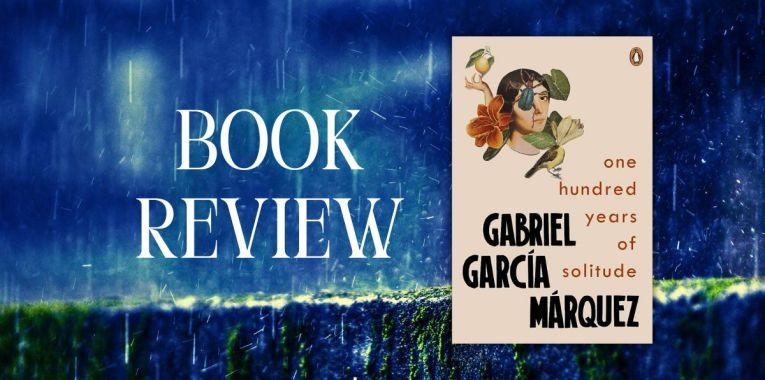
Book Review: ‘One Hundred Years of Solitude’ by Gabriel García Márquez

I’m unsure if I can say Gabriel García Márquez’s ‘One Hundred Years of Solitude’ was my next read because I couldn’t finish it.

I’m still trying to figure out what to say about this book because it’s a well-regarded classic. Wikipedia says it’s “one of the supreme achievements in world literature.” I don’t know if we read the same thing, but what I read was a jumbled mess.

There’s no plot or story. We learn nothing about the characters or their motivations behind why they do what they do. There’s no emotion or connection to anyone. It’s all surface-level events, with no understanding behind any of it. There’s almost no dialogue. Márquez tells us, the reader, a summary of what the characters say to one another. We don’t get to see it or experience it. And Márquez introduces new characters on every other page. And these new people often share an identical name to another character. The book lists empty, detached events that follow one another. It reads like a Wikipedia article. It has no heart, no soul. It doesn’t engage the imagination; it doesn’t draw me in.

I’ve done some reading around online, and most of the arguments I’ve seen say, ‘But that’s what Márquez intended! Isn’t it great?’ Yeah, you don’t care for any of the characters. The plot has no meaning. There’s no dialogue. It’s all tell and no show. Who cares if that’s intentional? Listen, it’s cool that the book is so unique and all. I get what Márquez was going for. But what he was going for is not enjoyable to me in any way, shape, or form. I’m sure there was a lot of stuff that brighter minds than I will get. But I’m not too fond of that attitude towards a hobby that should be enjoyable. The mark of a good book is whether people from all walks of life can appreciate it.

I seldom find that I can’t finish a book. But pushing through to finish this felt akin to self-abuse. I try my damndest to find redeemable qualities in all the media I consume, even if the fans and critics dislike it. I found nothing in ‘One Hundred Years of Solitude’ except that it has a terrific first line.

My takeaway message is this. Even if many people love something and consider it a classic, it does not mean you must like it. Second, you can stop anytime if you are not enjoying a piece of art meant for entertainment.

You don’t win points at the end of this life for having forced yourself through these 450 pages.

Book Review: ‘Rätsel um das Schneemonster’ by Thomas Brezina

Thomas Brezina’s ‘Rätsel um das Schneemonster’ is my next German read of the year.

My friend Bernie found out I was reading children’s books in German to improve my language skills. The kind soul he is, he donated a small library’s worth of kids’ books to me in my quest to speak the language. My first pick from these stacks of books was Brezina’s first Kinckerbocker-Bande book.

People have told me that these books mix Scooby-Doo with Austrian culture. And, what’s more, Brezina wrote these books in German. R. L. Stine’s Goosebumps books need translation, which sometimes makes for odd wording.

‘Rätsel um das Schneemonster’ follows the kids as they meet for the first time. Each child has won a drawing contest, drawing them together for the awards ceremony. But the man running the competition seems odd. And there are reports of a monster on the ski slopes of Tirol. The children investigate, like Mystery Inc in Scooby Doo. The plot is more complex, and the peril is sometimes more significant.

I found the German in Brezina’s book a bit trickier than in the Goosebumps books, but still manageable. Plus, increasing the difficulty to aid the learning process is good practice. Yet, that doesn’t mean I’ve moved on from Goosebumps. One thing I missed about Stine’s work was his monsters were real and not a man in a mask.

I can say that I enjoyed ‘Rätsel um das Schneemonster’ and look forward to reading more of Brezina’s work.

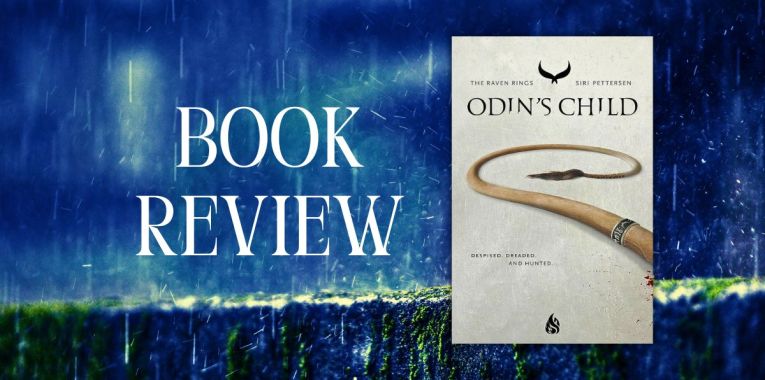
Book Review: ‘Odin’s Child’ by Siri Pettersen

Siri Pettersen’s ‘Odin’s Child’ is book thirty-one of the year (I made a counting error in my last review!).

I recently joined a book club here in Innsbruck. We first met in August to discuss some short stories, and ‘Odin’s Child’ was the first full-length novel we read. We will meet later in September, and I look forward to discussing it with the group.

Seeing as fantasy generally isn’t my cup of tea—with obvious exceptions, such as ‘Lord of the Rings’—I was dubious. But, as it turned out, I enjoyed ‘Odin’s Child’. I didn’t love or hate it (as I sometimes do with fantasy). Pettersen sidesteps some fantasy errors whilst succumbing to others.

The story follows Hirka, a tailless girl in a world where having a tail is the norm. She also can’t “bind”—the codeword for magic in this universe—whereas everyone else can. The usual fare of the “orphaned special one” begins, and worldbuilding clogs up the story. But once Pettersen gets most of that out of her system, the story is fun and fast-paced. I didn’t feel that the novel dragged with extraneous details once we got rolling. Except for a rather unnecessary attempted sexual assault, the tale was entertaining.

So, for someone who dislikes most fantasy, I had a good time with ‘Odin’s Child’. I am still determining whether I will read books two and three in the series. It’s not Pettersen’s fault that this genre isn’t for me, but I must be honest about how much I liked it. I may pick them up to see where Pettersen takes the story from here.

If you dig fantasy, you may love ‘Odin’s Child’; if you dislike the genre, you might like it anyway, like me.

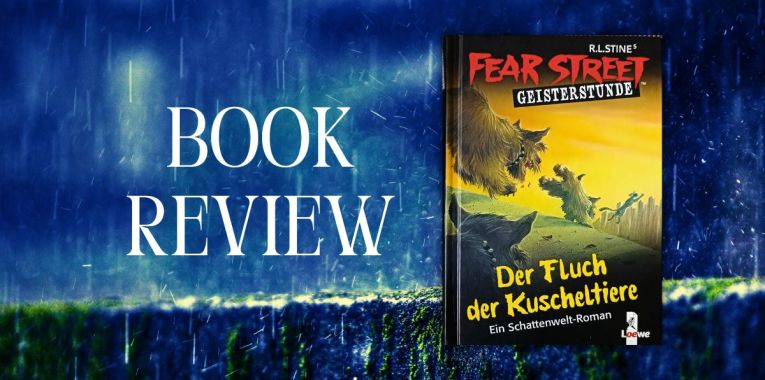
Book Review: ‘Der Fluch der Kuscheltiere’ by R. L. Stine

R. L. Stine’s ‘Der Fluch der Kuscheltiere’ is book thirty-one of the year.

I’ve lost track of the number I’m at for German book reads now, but that’s good. When asked, ‘How many books in German have you read?’ I can now answer: ‘Several.’

As usual, I had a blast with Stine’s kid-focused horror. This book follows Greg and his friend Liv as they go trick-or-treating on Halloween. My favourite time of year! Greg leads Liv into the dreaded Shadyside to one-up his nemesis in the candy collection. There, they find a house with a strange young boy and an even stranger older woman, who turns out to be a witch. They walk away with an enchanted bag that copies whatever you put inside tenfold. Dreams of money and candy float around the kids’ heads, but chaos isn’t far away.

Like most of Stine’s work, the horror is tame because of its target audience. Yet, one section in this book gave me the creeps: the cockroach section! It was pretty terrifying. I can only imagine how much that would freak little kids out—well, got to give them a genuine scare now and then, right? Great stuff.

On to the following children’s book in German!

Book Review: ‘Reprieve’ by James Han Mattson

For my twenty-ninth book of 2023, I picked James Han Mattson’s ‘Reprieve’ off my shelf.

I’ve had a copy of this for a few months, as I couldn’t resist that cover while browsing in my local Tyrolia. When I read the blurb, I knew I had to have the book. Book therapy—it’s a real thing! Anyway, I finally finished reading this novel, and I loved it.

The multifaceted story follows several characters at different points in time. The central premise revolves around a popular tourist spot: Quigley House. Quigley House is a haunted house amplified to the extreme. It allows complete contact between the guests and the actors. This haunted house attraction is so intense if your group even reaches the end, you win 60k. But only one group in history has reached the end without calling the safe word that ends the session. That word? ‘Reprieve’.

When a second group nears the victory line, a madman breaks into the house and murders a contestant.

The story spirals out from there, following characters from all walks of life. We learn more about the owner of the house, the people who work there, the contestants. We also find out about friends and family of those associated with Quigley. It seems unconnected, but the dots converge as the story progresses. I won’t spoil much here, but the novel nails some timely points.

Part horror-thriller, part social commentary, ‘Reprieve’ is a fantastic book; I adored it.

Book Review: ‘Sleeping Beauties’ by Stephen and Owen King

Stephen and Owen King’s ‘Sleeping Beauties’ is—checks notes—book twenty-eight of 2023.

This massive book slab took me quite a while to get through; I started it on one of the last days of my honeymoon. That does not mean the novel is slow or tedious. I wanted to give it the space to breathe. I’ve had a great time immersing myself in this dystopian world.

Reminiscent of his heyday (‘The Stand’, ‘It’), ‘Sleeping Beauties’ is classic King. It’s his old-school, multi-character, small-town America story. The setup is unique—all women, all over the world, are falling asleep. Once unconscious, the women grow a cocoon. If a foolhardy person disturbs the webbing, the women explode in a rabid attack.

For an older, straight, white, rich American, King is far more liberal than you’d expect him to be. Sure, some points could be a smidge more progressive, but at no point does King fumble the ball. The ‘Sleeping Beauties’ themes are on-point and relevant when taken alone. The story becomes even more extraordinary when considering the man who wrote it.

Each character is well-drawn and believable and contains the depth for which we all know King. Even insignificant side characters are multidimensional, and their motives are understandable. The story builds and escalates until it all collapses in a thrilling finale. Nobody does that ‘fate spiralling down towards its inevitable conclusion’ thing like him.

Oh, and the idea of father and son working together on a novel? It’s so wholesome, despite the bleak apocalyptic tale.

King is king.

Or should that be, the Kings are king?

Book Review: ‘Tomie’ by Junji Ito

‘Tomie’ by Junji Ito is my ‘twenty-seventh’ read of the year and my first manga ever.

I’ve used quotations because I’ve been reading ‘Tomie’ for quite some time now. My good friend, Leander, gifted me ‘Tomie’ for Christmas about two years ago, if memory serves. Based on his recommendation, I read ‘Tomie’ in small bites. I alternated between a non-manga novel and a chapter of ‘Tomie’. (Each chapter tells a different story, for the most part. A few follow the previous story arc, but most are self-contained tales.) This way, it took me a while to get to the end, but boy, I enjoyed this way of digesting the material.

I don’t know how to summarise ‘Tomie’ other than it’s about a girl who has power over men. This power drives them mad and leads to them committing unspeakable acts of violence. They perform these deeds, more often than not, against Tomie herself. And herein lies the weird nature of this manga: Tomie cannot die. She returns and multiplies like the proliferation of a metastasized tumour. The twisted tales are pitch-black, the likes of which one rarely comes across in Western media.

I am a massive horror nerd and am okay with gross-out scenes and weird visuals. That might be why Leander gifted this tome—see what I did there?—to me. Ito’s art style is sublime. He shies away from nothing and gives the reader some horrific images. It’s a testament to his mastery that he somehow manages to achieve jump scares, even in the written form.

As someone who had never felt compelled to read a manga before, all I can say is: damn, I was missing out. I’ll check out more in the future—especially the other collections by Junji Ito. You might be like me and love everything creepy but have avoided mangas. If so, do yourself a favour and pick up ‘Tomie’; it’s a great place to start.

But here’s a fair warning: it’s not for the faint of heart.

Book Review: ‘Die Rache der unheimlichen Puppe’ by R. L. Stine

R. L. Stine’s ‘Die Rache der unheimlichen Puppe’ is book twenty-six of the year.

I also read this on my honeymoon, along with a yet-to-be-finished King novel. If I want to keep progressing with my German language skills, I shouldn’t stop for a holiday!

The story follows Jessica and her friend. The pair aim to host children’s birthday parties for some much-needed cash. Meanwhile, Jessica’s younger twin sisters and their creepy ventriloquist dummy are causing havoc. And when a second dummy enters the picture, there’s no telling what will happen.

As with the previous Stine books, the threat is mild because the story is for children. Yet, there are some genuine scares, and the ending is quite a brilliant cliffhanger. Stine knows horror through and through, making him the master at aiming it at kids. It’s neither terrifying nor boring; a fine line to tread.

I’ll be reading another ‘Gänsehaut’ in German post haste!

Book Review: ‘Sphere’ by Michael Crichton

For the final book I finished on my honeymoon, I read Michael Crichton’s ‘Sphere’.

Until now, I’d only ever read Crichton’s ‘Jurassic Park’ novels. But I’d seen ‘Sphere’ recommended in horror circles, particularly for water-based scares. Considering my wife and I were on our beach honeymoon, I wanted some oceanic terrors on the holiday.

The novel opens with a psychiatrist flying out to an isolated spot in the ocean. The navy has picked him up and flown him out without information. Our protagonist believes an aeroplane has crashed, and he needs to help the survivors. But it turns out that an alien craft rests on the ocean bed, and experts think it’s been there for 300 years.

The story races from there. In typical—from what I’ve read—Crichton fashion, there’s a lot of good science in the novel. Crichton is the master of the suspension of disbelief, and ‘Sphere’ is no different. The novel rockets past at breakneck speed, and the finale is breathtaking. I won’t spoil too much here, but the book met my marine horror expectations.

Crichton puts much research into his books, and I can’t wait to read more of his bibliography.

Given what I’ve read so far, I doubt he’ll disappoint.