Book Review: ‘The Drawing of the Three (The Dark Tower, #2)’ by Stephen King

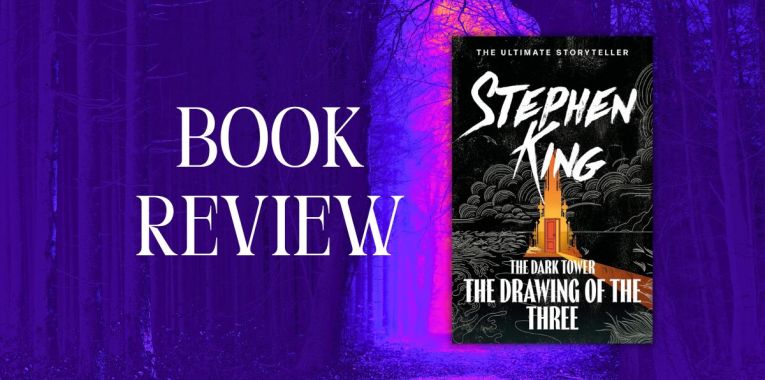
I read Stephen King’s ‘The Drawing of the Three (The Dark Tower, )’ as my next book for 2024.

I’m continuing along with my revisit to the world of the Dark Tower. Book two, in my previous opinion, was where the series started in earnest. The first book was necessary to kickstart the story, but it always felt like the black sheep of the family to me. It wasn’t until I got to book two that I thought, ‘Yeah, I can see why this gets so much love.’

Does the book still stand up in my estimations?

If you know me, you can guess my answer: without a doubt.

The story follows Roland, the last gunslinger, as he reaches the coast, following the end of book one. An encounter with a sea creature leaves him wounded. Struggling with blood poisoning, staggering along the beach, he finds a door in the sand. From there, the story rockets off into the stratosphere. ‘The Drawing…’ is King in his prime, firing on all cylinders. The action gets so intense that it’s unbelievable. I won’t spoil the events, but if you struggled with ‘The Gunslinger’, your payoff begins here.

I first read ‘The Drawing…’ when I was a teen passionate about books. King spellbound me then. I have now reread the book as an adult who also writes as a hobby. King has me in awe – this is a master of his craft flexing his muscles.

Flawless.

Book Review: ‘Utopia Avenue’ by David Mitchell

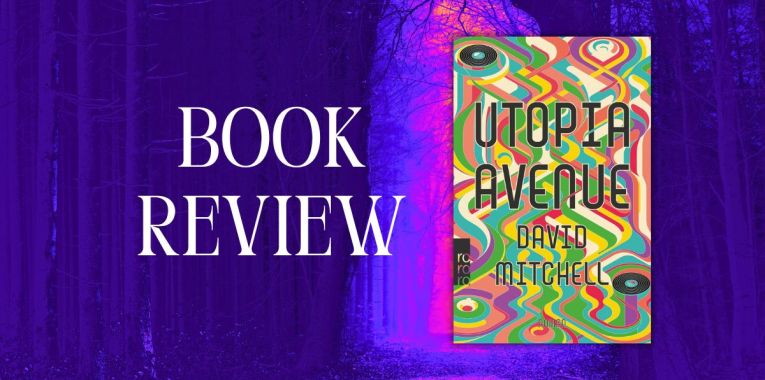
David Mitchell’s ‘Utopia Avenue’ is my next ‘sort of’ read of the year.

I say ‘sort of’ because I couldn’t bring myself to finish the book. I got a few hundred pages into it and realised I wasn’t having a good time. It took me a while to understand that I was not fond of the book because I’ve enjoyed Mitchell’s stuff before. I loved ‘The Bone Clocks’ and ‘Slade House’. Also, the book is set in the sixties, with which I have a semi-obsession. Enigmatic characters, such as Pink Floyd’s Syd Barrett, fascinate me. On paper, I ought to love ‘Utopia Avenue’.

And yet I didn’t.

It’s difficult to pinpoint why I wouldn’t say I liked the book. There are too many ‘main’ characters introduced in such a short time frame that you struggle to care for any of them. The book makes the swinging sixties – the hippie era – colourless and dull. There’s no straightforward story besides these folks coming together and making music. There’s no hook established in the chunk of the book I read. The name drops and cameos of famous bands and gigs feel goofy. And not in a good way.

I found the book rather exasperating because I could have loved it. I should have loved it.

Or, instead, Mitchell should have made me love it.

Book Review: ‘The Gunslinger (The Dark Tower, #1)’ by Stephen King

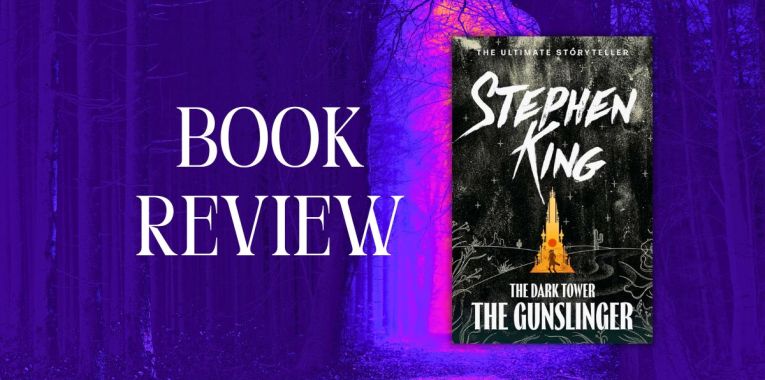
Stephen King’s ‘The Gunslinger (The Dark Tower, )’ was my next read of 2024.

I’ve read the entire ‘The Dark Tower’ novels, including ‘The Wind Through the Keyhole’. To say that I love these books is an understatement. But it has been a while since I finished the last book, and I was itching to read through the series again. I wanted to see if it still holds up to my older eyes.

In case you don’t know, the book follows Roland, the last gunslinger, on his quest for the Dark Tower. He also wants to catch the enigmatic man in black. Hence the famous opener: ‘The man in black fled across the desert, and the gunslinger followed.’ Who or what a gunslinger is and why he wants to catch this man and reach this location are complete mysteries.

Rereading ‘The Gunslinger’ reminded me of why I fell in love with these books in the first place. The world is bleak and apocalyptic, yet it is colourful and exciting. King created a beautiful combination of futuristic and medieval atmospheres in these books. The characters are all intriguing, with some being downright bizarre. You can’t help but want to know more about them and their stories.

Yet, this book is my least favourite in the saga. I know I’m not alone in this thinking, either. Steve himself echoes my sentiments, as do other fans of the series. Compared to other DT books, ‘The Gunslinger’ is slow and difficult to read. This moment was a period in Mr King’s career when he did not pursue the arty accessibility he perfected. Despite this, I recommend the book because it is the necessary intro to a fantastic tale. The fact that it’s short also works in its favour.

And remember this if you are having difficulty with it:

Steve corrected his course with the next book and adopted a better approach to this story.

Book Review: ‘Stasiland’ by Anna Funder

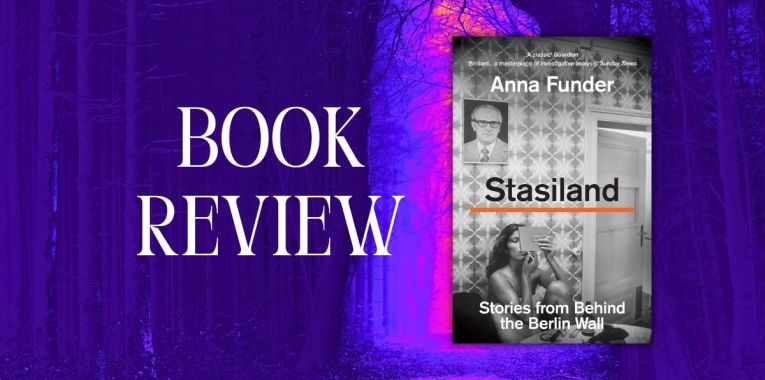
Anna Funder’s ‘Stasiland’ – a book club book – was my next read of the year.

As the title suggests, ‘Stasiland’ is a nonfiction book about East Germany during the GDR. What sets it apart is the perspective of its Australian author, Anna Funder. Funder visited Germany after the fall of the Berlin Wall. She found and interviewed people who lived during that era, including Stasis. ‘Stasiland’ weaves the interviewees’ and Funder’s stories together, as she navigates new Germany.

The book is informative and engaging. Considering its location in recent history, the material packs a punch and is weighty. Reading it, I learned a lot about this period. Hearing people’s opinions on both sides – for and against the division – was fascinating. The stories were breathtaking, the tension incredible, and many moments squeezed the heart. People can be so depraved and evil. People can be so brave and good. These people can live shoulder to shoulder.

While I can’t say that I ‘enjoyed’ this book in the traditional sense, it was riveting. The material is grim, but it’s not meant to be a fun read. It’s an educational journey through an unpleasant moment in time. It’s a book that will leave you with a deeper understanding of Germany’s history.

If Germany’s narrative over the last century interests you, I recommend ‘Stasiland’.

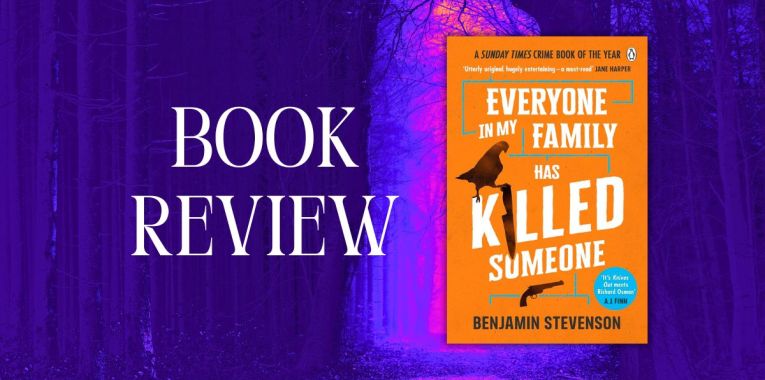
Book Review: ‘Everyone In My Family Has Killed Someone’ by Benjamin Stevenson

Benjamin Stevenson’s ‘Everyone In My Family Has Killed Someone’ is my next read of the year.

I liked being in a book club so much that I decided to start a new one at my workplace. ‘EIMFHKS’ was our first book choice, and I have to say that we started on a hell of a good novel.

The story follows Ernest Cunningham, a crime fiction rulebook writer. He’s on his way to a family retreat in the snowy mountains of Australia (I didn’t know Australia had snow). In the very first few pages, Ern assures us that – as given away by the title – everyone in his family has killed someone. But as soon as he arrives at the secluded hotel, things start going awry, and the body count rises.

I haven’t read many murder mysteries – I like the genre, but only when it’s bloody good. But ‘EIMFHKS’ enthralled me. The sense of humour with which Stevenson writes crackles and vibrates from the pages. The protagonist is witty and hilarious, and I laughed out loud more than once. If I had to summarise the novel in a singular word, I’d pick ‘playful’. It’s fun through and through. Stevenson recognises that his job is, first, to entertain. And he pulls this feat off with aplomb. As I said, I haven’t read much mystery. But this book feels like a deconstruction of the genre, only to build it back up into something original.

I recommend this book to everybody, even if you’re not into mysteries. Because I’m not a huge fan, and I completely adored this book.

I will read more from Stevenson in the future.

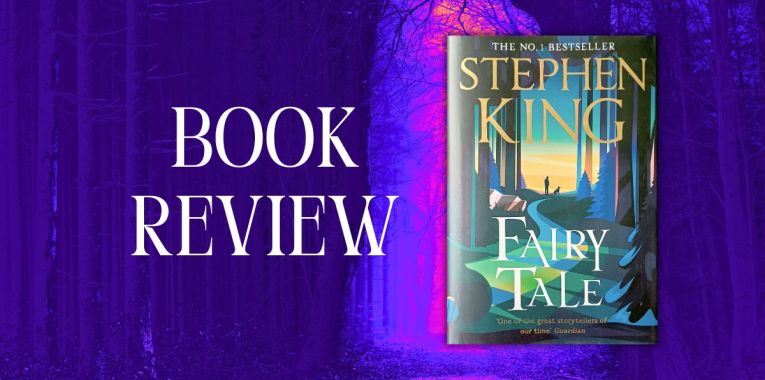
Book Review: ‘Fairy Tale’ by Stephen King

For book five of 2024, I read Stephen King’s ‘Fairy Tale’.

My wife bought me this for Christmas, and I’ve been making my way through it at an unhurried pace. I’ve been enjoying the ride, soaking in the magic. But, having had nasal surgery last week (it all went fine), I’ve had a lot of time on my hands. Thus, I’ve ploughed through the remaining pages of ‘Fairy Tale’. Alas, my time in Empis has come to an end.

The novel follows Charlie Reade, a high school kid who rescues an injured older man. The old man is grumpy and reclusive, but he has a great dog and a secret that leads to another world.

All I can say is: goddamnit, Steve. Seventy-six years young and still knocking out classics with the ease of a man a third of his age. To call it action-packed is an understatement. In less experienced hands, ‘Fairy Tale’ would have been a trilogy. But for Mr King, it’s another day at the office. The book is under 600 pages, but it could have been triple that with all the events crammed between the covers. There is so much life in this book that it’s bursting from the pages. I wanted more of the characters – both good and evil. I wanted more of the world of Empis. And, of course, I wanted more of Radar.

I adored this book.

If you like King or fantasy, you will have a good time too.

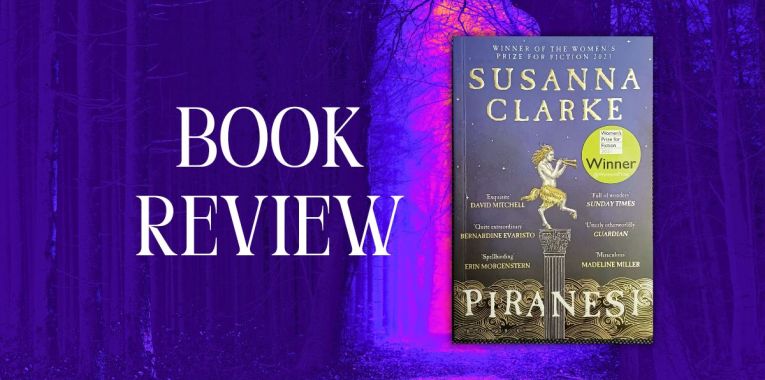
Book Review: ‘Piranesi’ by Susanna Clarke

Book four of 2024 is a book I read for my book club: ‘Piranesi’ by Susanna Clarke.

I’d heard a lot of hype surrounding this book, and its Goodreads score is awe-inspiring. People from a few different circles have suggested this novel to me. It’s won awards.

First of all, the good. I loved the character of Piranesi. He’s adorable and heartfelt, like a lost puppy. The other characters were also super interesting. The story was great, and learning about the house and its circumstances was fun. The very idea of the house is fascinating. The initial mental images of the place were vibrant and grounded.

So, I must have loved the book. Right?

Well, no. And why not? There are endless hallways and vestibules—on and on and on for 250 pages or so. At some point, I began to get irritated. Immersing yourself in these sorts of books is a delight for many readers. But it’s not for me. I need more direction and urgency.

It’s an excellent book that will appeal to many. But if you’re like me and get annoyed by unhurried prose and somnolent storytelling, it might not be for you.

And that’s okay.

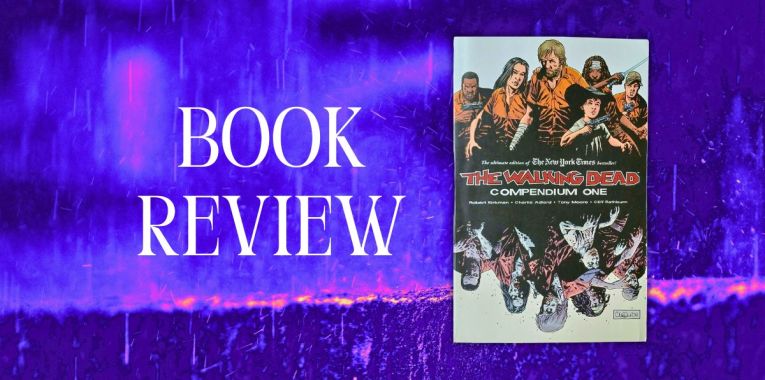
Book Review: ‘The Walking Dead, Vol. 1: Days Gone Bye’ by Robert Kirkman

Robert Kirkman’s ‘The Walking Dead, Vol. 1: Days Gone Bye’ is book three of 2024.

Ever since I watched the show – which, for all its flaws, I love – I’ve been curious about the comic. Yet, I never got around to it because I was too busy reading non-graphic books. I craved something visual after finishing Junji Ito’s ‘Tomie’ last year. A perfect chance to check out ‘The Walking Dead’.

The writing is faster-paced than the TV show. This pace was jarring because I expected a slow introduction and build-up. But it makes sense – this is a comic, after all. It’s a different medium. Once I got used to that, I got into the rhythm of each issue. I miss including some of the show’s characters – Daryl – but if I want the show, I can go and watch the show. The comic is its own thing, and it’s bloody good!

The art style is gorgeous and gruesome in equal measure. I often paused at some nastier scenes and found myself whispering, ‘Wow!’ I love the black and white choice; it reminds me of ‘Night of the Living Dead’, one of my favourites. If you love the aesthetics of zombie apocalypse media, there is a lot to love in these comics.

On to ‘The Walking Dead, Vol. 2: Miles Behind Us’!

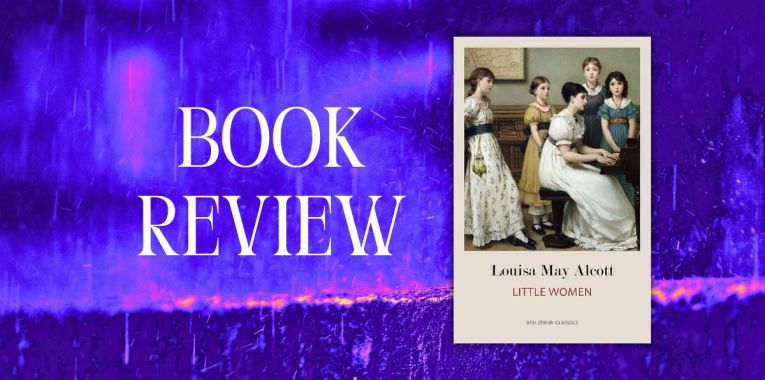
Book Review: ‘Little Women’ by Louisa May Alcott

I’m unsure if Louisa May Alcott’s ‘Little Women’ was my second read of the year because I couldn’t finish it.

This book was one of my picks for my book club. I’d always been curious based on—and don’t laugh now—that ‘Friends’ episode. You know, the one with Stephen King’s ‘The Shining’? Well, I figured if Joey loved it, then I would have no trouble.

How wrong I was.

This book was the most sugary, sentimental, too-perfect tripe I’ve ever tried to slog my way through. There are four daughters and one mother. They are all a Mary Sue. Everything is excellent, and everyone is a good little Christian girl. Everything was so brilliant and fabulous that it made me angry. ‘Oh, how good it is to be poor, for it so teaches us proper appreciation! Three cheers for Marmy!’ Bugger off.

I know that I am a thirty-year-old man living in the year 2024. I know I love horror and science fiction. I know Alcott wrote this in the 1800s. I know she wrote it for little girls. But I can appreciate things outside of my wheelhouse. Hell, this is part of the reason why I wanted to join a book club in the first place. To expose myself to books I would have otherwise missed. And I also know that this was one of my picks—I was curious.

But good God, was it awful.

I felt—and this is no exaggeration—nauseous after reading it.

After ingesting so much sugar, I may be diabetic now.

Book Review: ‘When I Sing, Mountains Dance’ by Irene Solà

Irene Solà’s ‘When I Sing, Mountains Dance’ is my first read for this new year!

The book is a relatively lean novel, under 200 pages. It blends poetry into traditional storytelling to make something unique. I’ve never read anything quite like it.

The story opens with a man being struck dead by lightning. From there, we branch off to explore the lives of other family members and friends he has left behind. The story spans several decades, weaving a multilayered vision of small-town life in a mountain community. We even get some unusual points of view, such as from the clouds, mushrooms, and even a dog.

The small glimpses of each life are powerful, moving, and profound. We bounced around from chapter to chapter, and it was always fun trying to puzzle out from whose perspective we were reading now. The book’s short length made this head-hopping enjoyable. As it stands, Solà hit the perfect length with ‘When I Sing, Mountains Dance’. It’s quite an experimental little book that takes no time to read.

If you fancy something entirely new, give ‘When I Sing, Mountains Dance’ a go; you won’t read anything else quite like it any time soon.