
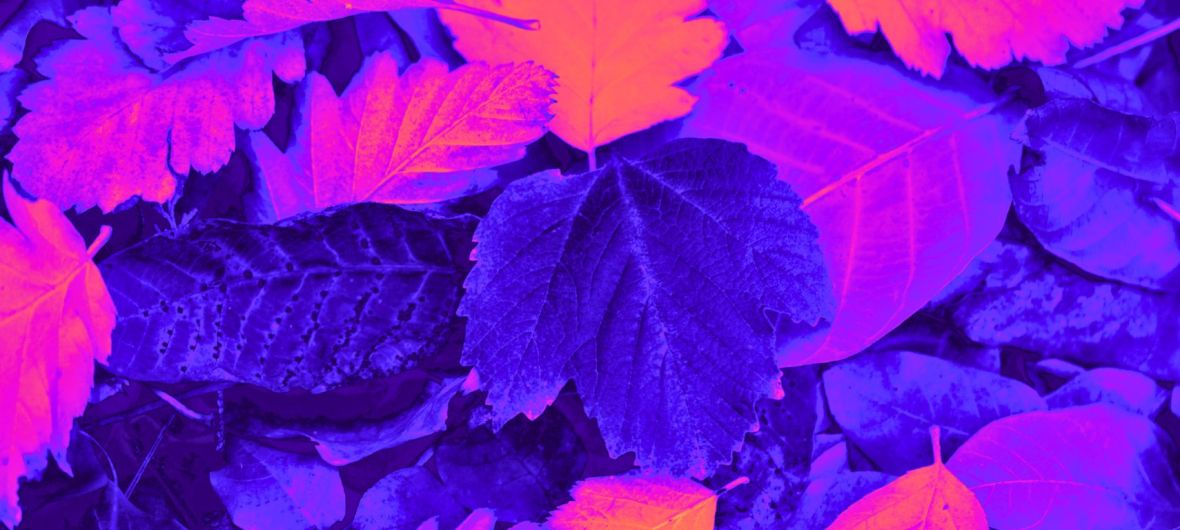
In a land far, far away, a dripping green leaf fell from a branch and spiralled to the gutter, where it joined its twins.
Clifton Coburns, perched atop his ladder, sighed. He’d been too rough with that one. Painting was a tricky job. You had to have a delicate touch. Otherwise, you’d knock the leaves free from their moorings, and they’d drop to the ground like a botanical A-bomb. Of course, it didn’t help that Clifton was getting on in years, and arthritis had swollen his fingers. It also didn’t help that it was October – as it always was – and he was wearing a t-shirt, shorts, and sunglasses. Clifton was shivering in the cold and squinting through the darkened lenses. He tried his best to get on with his work. Clifton glanced away from the vacated spot and then back again. ‘There you are,’ he mumbled to the tree.
A new leaf, identical to the first, had appeared. It was in the exact spot the previous had been. It also had the same shape, size, and colouration as the first. Missing, of course, was the green paint Mr. Coburns had applied.
It hadn’t always been this way – the painting, not the forever autumn they lived in. Until they’d elected Mayor Forde, the town’s name had been ‘Reavermourn’. But since he’d taken office, he insisted it was now ‘Summertime’. October’s orange, yellow, and brown leaves had to go – they were old and tired. Hadn’t the people had enough of autumn? They’d had it for years; nobody knew quite how long. It was hard to keep track of time when time couldn’t break free of October’s shackles. They returned to the first at the end of every thirty-first. No, the town of Summertime needed a change. That was why the people had elected Mayor Forde. And Mayor Forde, unlike his contemporaries, intended to deliver on his campaign promises. Thus, Summertime needed vibrant colours, t-shirts, shorts, ice creams and pop music. If the world would not deliver them beyond the windy autumn season, the people would do it themselves. With his tongue sticking out the corner of his mouth, Clifton stroked the orange leaf with his brush. Even through his sunglasses, the radium-green hue made him blink.
The leaf shook and bounced from its branch. It rotated first one way and then the other.
Clifton held his breath. He squinted at the leaf, which dripped its neon green goo to the ground, with a Dirty Harry glare. ‘Go on,’ he growled. ‘I dare you.’
But the leaf seemed not to want to test Clifton’s patience. Somehow, it clung to its stem for dear life. It held on.
A smile touched the corners of his lips. This one behaved better than many of the others. He looked down into the gutter beneath the feet of his step ladder.
A hundred or so leaves – many of them with a kiss of green, many lying next to their clones – blanketed the ground. The paint had congealed and glued them together to form a photosynthetic rat king.
It all seemed pointless. But Clifton had passed the age where he’d fight the idiocy of bureaucracy and middle management. So be it if they wanted to pay him to do this nonsense. Oh well, on to the next leaf. Clifton dipped his brush into the paint, wiped the excess on the rim, and brushed the leaf.
This one didn’t so much as dance when he tickled it with his brush. It held on, like a marine, with a white-knuckle grip.
Clifton let out his breath once he’d covered any trace of October visible. There, he’d finally finished the last leaf. This tree no longer held the burnt orange hues of autumn but proclaimed the vibrant greens of summer. Clifton lifted his head and clicked his neck from side to side. He was getting too old for this sort of work. He looked around and sighed at the sight.
A row of trees stretched away before him, all waiting for him to paint them. One down, a whole bunch to go.
He grumbled. Mayor Forde had asked him to give a projected completion date for painting the trees. Clifton had tried to get the mayor to understand that it was hard to estimate, but he didn’t think he’d grasped his point. You had to have done this sort of work before to comprehend the difficulties such a job entailed. Clifton began to descend with care while carrying his paintbrush and bucket. But then he froze, a sinking feeling making his stomach drop.
A slight breeze whispered through the leaves. It seemed to seek out Clifton like an evil spirit searching for a host. The branches rustled, and the trees whispered their sibilances. Shh. Shh.
‘No,’ he said. ‘Don’t you dare.’
The wind grew faster and louder, circling him like a shark with blood in its nostrils. The trees began to twitch. Their branches shook off their tired bones, their leaves waking from hibernation.
Clifton clung onto the ladder. Not because the wind was in danger of knocking him down but because he felt tired. ‘God damn it,’ he said, knowing full well what was going to happen next – a sort of low-stakes premonition.
The breeze rose to a whooping gale. The powerful gust knocked the drying, dying leaves off their branches. They spun into the air. The faux-green ballerinas twirled into the gutter, where they became more trash for him to rake up. In their place, identical leaves – except for the painted-on green – replaced them in the blink of an eye.
Clifton groaned. The new, dry and crunchy leaves seemed to taunt him with their lack of vitality. A painter’s job was never done, not in a world where it was forever autumn. And not in Summertime. He climbed back up to the top of the ladder, shivering in the autumnal chill. ‘Oh bugger it,’ he mumbled.
The orange leaves, half dead, waited for their fresh coat.
He dipped his brush into his can and began to paint again.
Sunday, February 18, 2024
Written for March’s Die Bäckerei Writers’ Open Mic: ‘In a Land Far, Far Away’
 joshuainsole.com