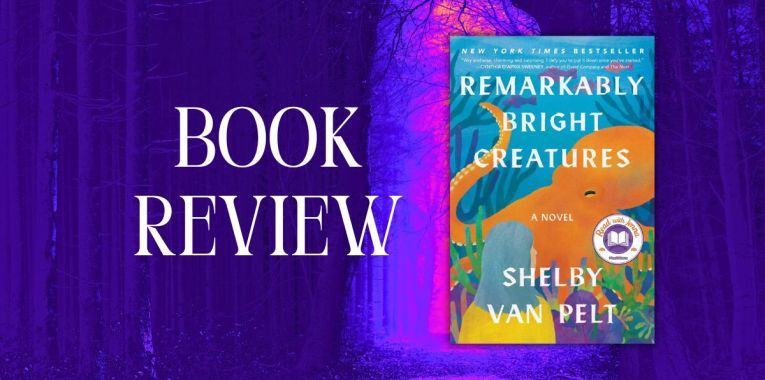
Book Review: ‘Remarkably Bright Creatures’ by Shelby Van Pelt

Shelby Van Pelt’s ‘Remarkably Bright Creatures’ marks book two of the year.

I’ve started a new job at a company that has a book club, and I was very much looking forward to joining. We’re discussing this book for our first meeting of the year, and I can’t wait to chat with everyone about it.

‘Remarkably Bright Creatures’ follows the paths of Tova and Cameron. Tova is recently widowed and lost her son many years ago. At night, she cleans an aquarium, where a Pacific giant octopus is the main attraction. Cameron grew up with his aunt and has never succeeded in life. He has never gotten his life on track since his addict mum abandoned him as a child. A series of events knock them out of their ruts, and the story unfolds like a flower blooming in the spring.

I loved this book. Slow and warm, it is a bit different from my usual fare, but it enraptured me. I challenge anyone not to have misty eyes at the novel’s end. As I started the book, I told my wife, ‘I’m pretty sure this is going to ruin me.’ The writing is witty and wise, and the characters – even exasperating at times – feel real. Even though the twist becomes clear early on, its execution still packs a punch.

It is a beautiful and original story; I recommend this to everyone.

Book Review: ‘Ghost Story’ by Peter Straub

Peter Straub’s Ghost Story is my first read of 2025!

I started this book around Halloween last year, but finishing it took me a while. I picked it up after reading Stephen King’s high praise. And I’ve also enjoyed the books the two co-wrote (‘The Talisman’, ‘Black House’). I adore King’s slow-burn, small-town epics, so I went into this one expecting the same.

Unfortunately, it didn’t work for me.

Like King, Straub sets up a town’s worth of characters and a curious supernatural mystery. The atmospheric, snowy setting lingers on every page. The prologue, in particular, hooked me: a man kidnaps a young girl for reasons we don’t yet understand. But after that strong start, the story began to lose its grip on me.

The narrative shifts to a group of older men telling ghost stories. Straub punctuates this with extended, meandering explorations of the town and its people. While this setup has potential, I struggled to stay engaged. The pacing felt slow, with stretches where little happened. Some plot points felt underdeveloped or convoluted. I also found the dialogue and character behaviour hard to connect with.

I wanted to love this book. I gave it my all, but I struggled to stay invested. Even the conclusion, which Straub built up over hundreds of pages, felt anticlimactic.

That said, I see why others might enjoy it. Straub’s writing creates a strong sense of place, and the atmosphere is perfect for a cold night. Yet, it lacked the urgency and tension that makes a slow-burn story rewarding.

I wish it had lived up to its initial promise.

⭐⭐☆☆☆

Book Review: ‘Caliban Cove (Resident Evil, #2)’ by S.D. Perry

For the final book of my 2024 reading challenge, I picked up S.D. Perry’s ‘Caliban Cove (Resident Evil, )’.

Having enjoyed Perry’s first ‘Resident Evil’ novelization, I wanted something lighthearted and easy. With its evil corporations, secret labs, and hordes of zombies, this book was a no-brainer. Pun intended.

Unlike most of Perry’s Resident Evil books, ‘Caliban Cove’ is not tied to a specific video game. There is no ‘Caliban Cove’ game – this story is Perry’s creation. Free to craft her own story, she takes us on a new romp with Rebecca Chambers, the rookie medic from the first story. The story follows the events of ‘The Umbrella Conspiracy’. Perry dives straight into the action.

Like its predecessor, ‘Caliban Cove’ is fast-paced and easy to read, making it a breeze to fly through the pages. I appreciated Perry’s creativity with new monsters and villains, bringing some freshness. That said, the ending felt rushed, and I wanted more details about some of the creatures. While keeping your big bads in the shadows can build suspense, having some payoff at the end is nice.

Although weaker than book one, ‘Caliban Cove’ is still fun – it’s good cheesy action to turn your brain off.

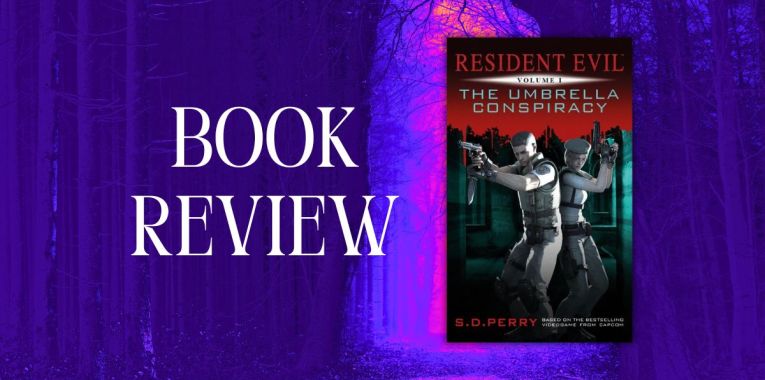
Book Review: ‘The Umbrella Conspiracy (Resident Evil, #1)’ by S.D. Perry

I picked up ‘The Umbrella Conspiracy (Resident Evil, )’ by S.D. Perry, for my next read of the year.

I’ve loved the ‘Resident Evil’ games since my older brother got ‘Resident Evil 3: Nemesis’ in the early 2000s. I’ve since devoured every game. With ‘Resident Evil 3’ day at the end of last month, I wanted to delve back into Raccoon City. But I didn’t have the time to replay the games. So I thought, ‘Why not try the novels?’ I’ve heard other fans talking about them in horror circles, and I’m a big fan of trashy books and B-movie horror.

The book follows – surprise, surprise – the S.T.A.R.S. members as they investigate trouble in Raccoon Forest. People have been disappearing, sometimes turning up eaten. Perry opens the novel with the S.T.A.R.S.’s Bravo team going missing, leaving the Alpha team to investigate. It doesn’t take long until a zombie shambles onto the page, and from there, the book follows the game’s beats. We even get P.O.V.s from Jill and Chris – the first game’s two playable characters – along with the rest of the cast.

The book follows the game’s story much more than its silver-screen counterparts. It might do too well, describing the maze-like corridors and endless puzzles. But I understand that Capcom must’ve insisted Perry do this. This adherence might also be a plus for those who felt the movies should have stuck to the source material.

I went in expecting it to be enjoyable but flawed – after all, I have a soft spot for the movies – but it turned out decent. It’s not ‘The Shining’ or anything, but who would expect that from a video game novelisation? The characters are as we remember them, with some embellishment. The settings are all there, and the atmosphere is suitable. The puzzles fit into the story, and all the monsters appear – even if killed “off-screen”.

Perry’s book scratches the itch (itchy, tasty) well if you want to return to the Spencer Mansion.

Book Review: ‘Es wächst und wächst und wächst…’ by R. L. Stine

R. L. Stine’s ‘Es wächst und wächst und wächst…’ is my penultimate read for my 2024 reading challenge.

I decided to pick up another after reading a few Goosebumps books in German to help me learn the language. I needed something easier after struggling with ‘Der kleine Prinz’ earlier in the year.

The book follows Evan, a boy whose parents left him with his old aunt as they leave town searching for a new house. Evan, who is very reluctant to do this, brings along his best pal, an old dog named Trigger. He soon meets a young girl of the same age named Andy, who shows him a dusty old toyshop with an irascible owner. The pair discover a strange tin with the word ‘Monsterblood’ (‘Monsterblut’) on the label. But, upon purchasing this treat, Evan learns it does not stop growing.

The story is classic Stine – fun, with likeable characters and easy-to-hate bullies. The book has plenty of peril, but you always know the heroes will get out of it (although, as a kid, I didn’t know this!). As my friend promised me upon gifting me ‘Der kleine Prinz’, I found the German in this book much more accessible. Some bits were tricky and required a dictionary, but I got through it. It’s getting more accessible – I’ll move on to the Fear Street novels in German soon.

‘Es wächst und wächst und wächst…’ is a great horror book for kids and is an excellent book to help adults learn a new language.

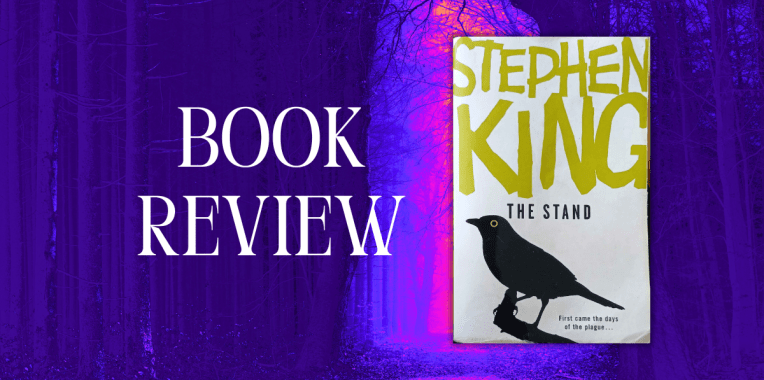
Book Review: ‘The Stand’ by Stephen King

For my latest read of 2024, I dove back into Stephen King’s ‘The Stand’.

As with most of King’s work, ‘The Stand’ is something I read as a teen and wanted to revisit. A monster of a book, I began this while on holiday in Finland over the summer. It took me from mid-July to last week to finish. When I was a kid and had no commitments, I could burn through a tome like this in a week. But those days are long gone.

You might stick with a book this long for one of two reasons: either it drags, and you dread picking it up, or you love it so much that the length doesn’t matter. ‘The Stand’ definitely falls into the latter camp. It’s an absolute triumph and one of King’s best.

The book begins with a catastrophe at a military base. What follows is a pandemic that ends almost all human life. A few smatterings of survivors remain, left to rebuild how they see fit. Groups form around two individuals who the survivors dream about. Mother Abigail, a 108-year-old black woman, serves as a force for good. Randall Flagg, an evil figure with supernatural powers, is hellbent on destruction. King writes so many characters that it’s hard to pinpoint a single protagonist. But there are clear groups of ‘heroes’ and ‘villains’, and the large cast adds depth and complexity.

The intro is electric, with that cloying, inescapable destiny thing that King does so well. As soon as the wheels start to fall off – and the body count rises – King doesn’t let up. After this, the tempo slows, and we get to know our wide cast. The characterisation of this wide range of people, from good to evil, is astonishing. As things become more complex, you can’t help but feel their losses and celebrate their wins. Nobody does this like King. You’ll be so hooked when the magical elements – e.g. prophetic dreams – come in that you won’t mind the shift to fantasy. ‘The Stand’ is a glorious book from one of the best to do it.

It’s a long read, but every single page is worth it.

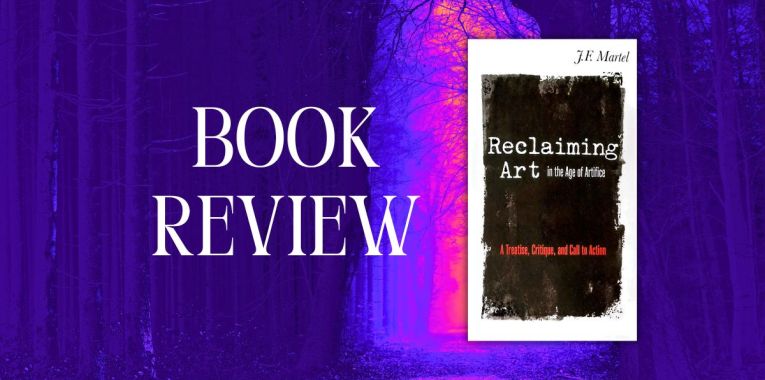
Book Review: ‘Reclaiming Art in the Age of Artifice’ by J. F. Martel

For my next read of 2024, I finally got around to reading J. F. Martel’s ‘Reclaiming Art in the Age of Artifice’.

Of course, you will gasp when you learn this book was a gift from my friend Leander. Since I like to create stories, music, and digital art, we’ve often discussed creativity and art. These conversation topics prompted Leander to gift ‘Reclaiming Art…’.

Martel is a writer and filmmaker in the Canadian TV and film industry; he has the credentials to discuss art. His writing style is not challenging or impenetrable – Martel writes to communicate. If it is sometimes difficult to read, it is because of the complexity of the topic.

As the subtitle claims, ‘Reclaiming Art…’ is a ‘Treatise, Critique, and Call to Action’. (He won me over with that use of an Oxford comma.) Martel differentiates – referencing James Joyce, Oscar Wilde, and James Cameron – art from artifice. Artifice, in simple terms, is either pornographic or didactic. I.e., it either makes the observer want something or want to avoid something. For example, an advert is artifice because it makes you want to buy something. True Art (TM) does no such thing. From there, ‘Reclaiming Art…’ goes off in ways I couldn’t summarise in a review.

While I have yet to grasp all of Martel’s ideas, what I did understand was inspiring. This book is for creators and consumers alike, especially if you’re weary of this modern world. It’s not only informative but also a call to action that can invigorate your creative spirit.

Reading ‘Reclaiming Art…’ has sparked a deep introspection into my creative process as a writer.

And that’s a powerful thing.

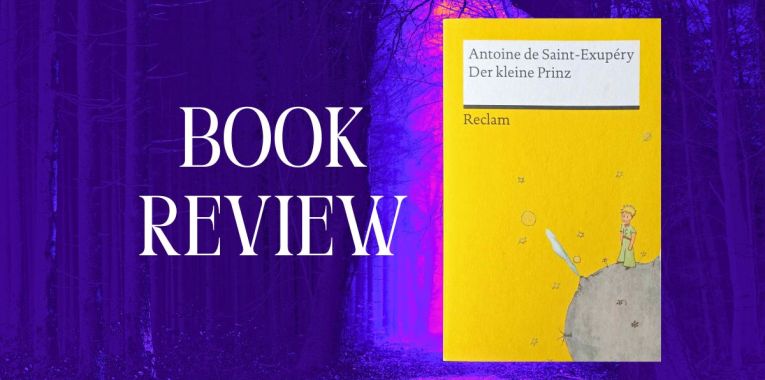
Book Review: ‘Der kleine Prinz’ by Antoine de Saint-Exupéry

Antoine de Saint-Exupéry’s ‘Der kleine Prinz’, which I started last November, was my next book of 2024.

The book, which – surprise, surprise! – my good friend Leander gifted to me, has taken me a while to complete. Leander knows that I’m reading kids’ books in German to learn the language, hence the present. He said to me upon giving the book, ‘If you can get through this, all other children’s books in German will be a breeze.’ Or words to that effect, I’m paraphrasing.

Published in 1943 by the French author Saint-Exupéry, the story starts with a pilot crashing in the Sahara. The narrator meets the little prince there as his water runs out and his need to repair his plane worsens. The little prince recounts his story to the pilot, starting with his home planet and his beloved rose. The story blooms from there, in the fantastical nature of children’s fairytales.

Written in a rather sombre tone that reflects the time – France in the 1940s – ‘Der kleine Prinz’ is a beautiful book. It touches on many deep topics, such as loneliness, love, and death. It does not dumb down these issues for kids but instead presents them in an easy-to-understand way. It is at once sad and joyous, heavy and lighthearted. I loved it.

Of course, as hinted at by Leander, the novella took a lot of work to read in German. The use of language is tricky and often archaic. I don’t mean it’s Old High German, but if you’ve read anything from before the 1950s, you’ll know what I mean. For someone learning the language, this made the book quite hard, hence the time it took me to read it. But I persevered and managed it, a feat I am proud of. It was a rewarding experience upon completion.

It is clear why ‘Der kleine Prinz’ is a classic. The book is beautiful, and its messages and themes still ring true.

I recommend it to everyone, regardless of age or language.

***

Here’s my attempt at writing a review in German (with grammatical corrections from my wife):

Ich habe Antoine de Saint-Exupérys ‘Der kleine Prinz’ im November angefangen.

Mein Freund Leander hat mir das Buch geschenkt. Er weißt, dass ich Bücher auf Deutsch lese, um die Sprache besser zu lernern. Er hat gesagt, ‘Wenn du dieses Buch schaffst, alles andere wird leichter.’

Saint-Exupéry hat ‘Der kleine Prinz’ 1943 veröffentlicht. Die Geschichte fangt mit einem Pilot der in der Wüste abstürzt an. Dort trifft er den kleinen Prinzen. Der kleine Prinz erzählt seine Geschichte dem Piloten.

‘Der kleine Prinz’ hat viele Themen, zum Beispiel Liebe, Einsamkeit, und Sterben. Es ist oft schwer aber nicht zu schwer für Kinder. Ich habe es geliebt.

Natürlich war das Buch schwierig auf Deutsch zu lesen. Aber ich habe es geschafft. Ich bin stolz auf mich.

Es ist klar warum ‘Der kleine Prinz’ ein Klassiker ist. Es ist schön und tiefgreifend.

Ich empfehle euch das Buch.

Book Review: ‘Goodbye, Eri’ by Tatsuki Fujimoto

With a gentle prod from my friend, Leander, I read Tatsuki Fujimoto’s ‘Goodbye, Eri’ as my next book of 2024.

Fujimoto is also the creator of other well-known mangas, such as ‘Fire Punch’ and ‘Chainsaw Man’. I have not read either of these. But that may change, depending on what Leander gives me to read, with encouragement, in the future. He gave me ‘Goodbye, Eri’ a while back, and it has waited for me in my stack of books. Well, buddy, I finally got around to it.

The story follows Yuta Ito, who receives a smartphone as a birthday present. His ill mother then requests that he record her as much as possible before she dies. Only, when it comes to recording her death, he chickens out. The story spirals out from there, twisting, turning, and folding in on itself.

The book breezes by and takes about the same time as a movie. As Leander recommended, I binged it in one sitting, and it’s the best way to consume ‘Goodbye, Eri’. It reflects on storytelling, creating art, and grief and loss. When taken in one shot, it is quite a profound experience. I loved it.

Given how fast it is to read, I’d recommend it to everyone, even if you don’t like manga.

Book Review: ‘The Walking Dead, Vol 2: Miles Behind Us’ by Robert Kirkman

For my next read in 2024, I read Robert Kirkman’s ‘The Walking Dead, Vol 2: Miles Behind Us’.

I purchased ‘Compendium One’ at the start of the year and breezed through the first volume. As you could have predicted, I adored it because I love all things zombie. My obsession with the undead will never die (pun intended). But, with the usual relentlessness of life, I didn’t get around to continuing.

After finding some time on my hands, I recently blasted through the second volume. And it’s brilliant. The story continues with Rick and Co’s struggle to survive in a zombie-infested world. The volumes don’t quite line up with the season breaks of the show, but they match, more or less.

The story deviates from the TV show, but these changes are pleasant surprises. Some of the big moments I remember from the show are there, and some aren’t. And there are a few new ones. I can say the same for the characters, too. It’s fun seeing where the showrunners stuck to the script and where they made their tweaks.

But I have to praise the artwork. It’s sublime and gory. You can’t tear your eyes away from some of the gruesome images on the page. The use of black and white for scenes involving blood and viscera was a clever one. It reminds me of one of my favourite movies, George A. Romero’s ‘Night of the Living Dead’.

I aim to dive into the third volume soon, as I’m having a blast.