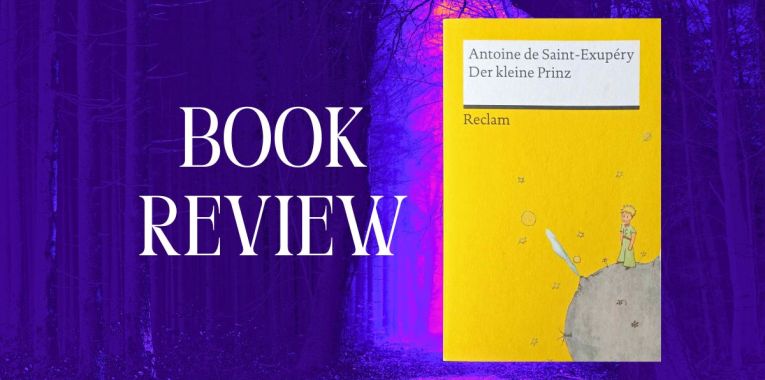
Book Review: ‘Der kleine Prinz’ by Antoine de Saint-Exupéry

Antoine de Saint-Exupéry’s ‘Der kleine Prinz’, which I started last November, was my next book of 2024.

The book, which – surprise, surprise! – my good friend Leander gifted to me, has taken me a while to complete. Leander knows that I’m reading kids’ books in German to learn the language, hence the present. He said to me upon giving the book, ‘If you can get through this, all other children’s books in German will be a breeze.’ Or words to that effect, I’m paraphrasing.

Published in 1943 by the French author Saint-Exupéry, the story starts with a pilot crashing in the Sahara. The narrator meets the little prince there as his water runs out and his need to repair his plane worsens. The little prince recounts his story to the pilot, starting with his home planet and his beloved rose. The story blooms from there, in the fantastical nature of children’s fairytales.

Written in a rather sombre tone that reflects the time – France in the 1940s – ‘Der kleine Prinz’ is a beautiful book. It touches on many deep topics, such as loneliness, love, and death. It does not dumb down these issues for kids but instead presents them in an easy-to-understand way. It is at once sad and joyous, heavy and lighthearted. I loved it.

Of course, as hinted at by Leander, the novella took a lot of work to read in German. The use of language is tricky and often archaic. I don’t mean it’s Old High German, but if you’ve read anything from before the 1950s, you’ll know what I mean. For someone learning the language, this made the book quite hard, hence the time it took me to read it. But I persevered and managed it, a feat I am proud of. It was a rewarding experience upon completion.

It is clear why ‘Der kleine Prinz’ is a classic. The book is beautiful, and its messages and themes still ring true.

I recommend it to everyone, regardless of age or language.

***

Here’s my attempt at writing a review in German (with grammatical corrections from my wife):

Ich habe Antoine de Saint-Exupérys ‘Der kleine Prinz’ im November angefangen.

Mein Freund Leander hat mir das Buch geschenkt. Er weißt, dass ich Bücher auf Deutsch lese, um die Sprache besser zu lernern. Er hat gesagt, ‘Wenn du dieses Buch schaffst, alles andere wird leichter.’

Saint-Exupéry hat ‘Der kleine Prinz’ 1943 veröffentlicht. Die Geschichte fangt mit einem Pilot der in der Wüste abstürzt an. Dort trifft er den kleinen Prinzen. Der kleine Prinz erzählt seine Geschichte dem Piloten.

‘Der kleine Prinz’ hat viele Themen, zum Beispiel Liebe, Einsamkeit, und Sterben. Es ist oft schwer aber nicht zu schwer für Kinder. Ich habe es geliebt.

Natürlich war das Buch schwierig auf Deutsch zu lesen. Aber ich habe es geschafft. Ich bin stolz auf mich.

Es ist klar warum ‘Der kleine Prinz’ ein Klassiker ist. Es ist schön und tiefgreifend.

Ich empfehle euch das Buch.

Book Review: ‘Goodbye, Eri’ by Tatsuki Fujimoto

With a gentle prod from my friend, Leander, I read Tatsuki Fujimoto’s ‘Goodbye, Eri’ as my next book of 2024.

Fujimoto is also the creator of other well-known mangas, such as ‘Fire Punch’ and ‘Chainsaw Man’. I have not read either of these. But that may change, depending on what Leander gives me to read, with encouragement, in the future. He gave me ‘Goodbye, Eri’ a while back, and it has waited for me in my stack of books. Well, buddy, I finally got around to it.

The story follows Yuta Ito, who receives a smartphone as a birthday present. His ill mother then requests that he record her as much as possible before she dies. Only, when it comes to recording her death, he chickens out. The story spirals out from there, twisting, turning, and folding in on itself.

The book breezes by and takes about the same time as a movie. As Leander recommended, I binged it in one sitting, and it’s the best way to consume ‘Goodbye, Eri’. It reflects on storytelling, creating art, and grief and loss. When taken in one shot, it is quite a profound experience. I loved it.

Given how fast it is to read, I’d recommend it to everyone, even if you don’t like manga.

Book Review: ‘The Walking Dead, Vol 2: Miles Behind Us’ by Robert Kirkman

For my next read in 2024, I read Robert Kirkman’s ‘The Walking Dead, Vol 2: Miles Behind Us’.

I purchased ‘Compendium One’ at the start of the year and breezed through the first volume. As you could have predicted, I adored it because I love all things zombie. My obsession with the undead will never die (pun intended). But, with the usual relentlessness of life, I didn’t get around to continuing.

After finding some time on my hands, I recently blasted through the second volume. And it’s brilliant. The story continues with Rick and Co’s struggle to survive in a zombie-infested world. The volumes don’t quite line up with the season breaks of the show, but they match, more or less.

The story deviates from the TV show, but these changes are pleasant surprises. Some of the big moments I remember from the show are there, and some aren’t. And there are a few new ones. I can say the same for the characters, too. It’s fun seeing where the showrunners stuck to the script and where they made their tweaks.

But I have to praise the artwork. It’s sublime and gory. You can’t tear your eyes away from some of the gruesome images on the page. The use of black and white for scenes involving blood and viscera was a clever one. It reminds me of one of my favourite movies, George A. Romero’s ‘Night of the Living Dead’.

I aim to dive into the third volume soon, as I’m having a blast.

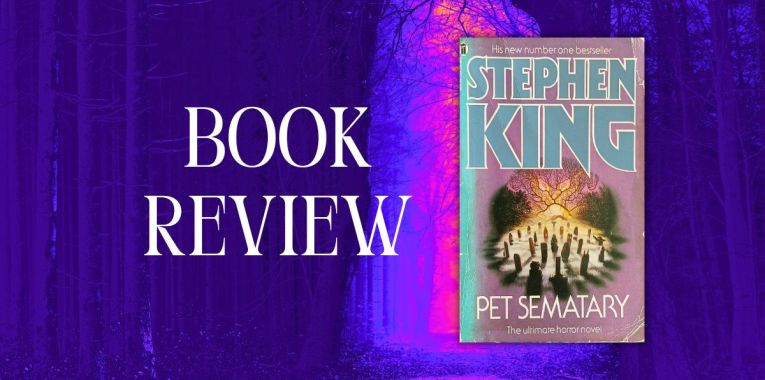
Book Review: ‘Pet Sematary’ by Stephen King

For the next book of 2024, I decided to reread Stephen King’s ‘Pet Sematary’.

I first read ‘Pet Sematary’ between thirteen and fifteen. Around the same time, I read ”Salem’s Lot’, and the two books moved me unlike anything else. ‘The Shining’ was my first King book, but these two novels marked the point where I fell in love with his writing. They showed me that horror books for adults can be vibrant yet grim, full of hope and fear. It was the first time I ached for characters when tragedy befell them. I’ve always maintained that these two books are my favourite.

So, with that said, does the book live up to the hype I’ve had in my head for half of my life?

One hundred per cent.

The story follows Louis Creed, a doctor who moves – with his young family – into an old house in Maine. Across the street, a kind old couple, Jud and Norma, live. And up the hill, into the woods, there’s an odd place where generations of kids buried their deceased pets.

The book is beautiful and horrific. The pages rip by, and before you know it, you’re deep in the woods of the novel. The terror is palpable – there’s a reason why King thinks this is his scariest book. And the sorrows are so deep. Even though I already knew the events of the book, they struck me as hard as they did seventeen or so years ago. I was a little scared – in more than one way – to reread ‘Pet Sematary’. I was afraid it wouldn’t live up to the book I had made it out to be in my mind. What a silly notion; this is Stephen King, after all.

‘Pet Sematary’ is one of the best from the best, and it is an absolute must-read.