Book Review: ‘The Mist’ by Stephen King

After my previous read, I reread Stephen King’s ‘The Mist’ as a palette cleanser for my next book of the year.

‘The Mist’ is a shorter book, perfect for my current mood. I needed something to remind me that I can enjoy reading when the writing style matches my reading style. Some things click with you; some things don’t.

And King very much clicks with me.

The story follows Dave and his son, “Big” Bill, in the wake of a storm for the ages. Trees have fallen, and wooden piers have sunk. Cars and garages have suffered damage. And an odd mist is creeping in over the lake. Dave heads a small group into town to pick up supplies for the next few days without power. They leave Dave’s wife and Bill’s mother alone at the house, which has suffered a smashed-in window. But whilst in the local supermarket, the mist closes in and traps them inside.

And there’s something awful in the mist.

I will keep the details of the story secret. You should read it (or watch the movie—it’s fantastic) and find out for yourself. But I recommend starting with the book and moving on to the film. I will say this for the film: it surpasses King’s ending on paper here. (Although that’s not to say that King stumbles on the landing.)

King’s style makes the short novella—a little under 200 pages—feel like a pamphlet. The pages fly by, making you wish he’d turned it into a full-length novel. He has the gift, after all. But, then again, King might have chosen this format for a reason.

‘The Mist’ is a short, sharp jab to the dome; it packs a punch.
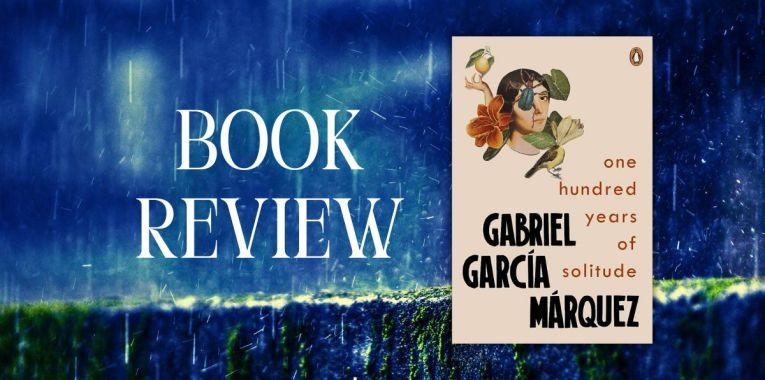
Book Review: ‘One Hundred Years of Solitude’ by Gabriel García Márquez

I’m unsure if I can say Gabriel García Márquez’s ‘One Hundred Years of Solitude’ was my next read because I couldn’t finish it.

I’m still trying to figure out what to say about this book because it’s a well-regarded classic. Wikipedia says it’s “one of the supreme achievements in world literature.” I don’t know if we read the same thing, but what I read was a jumbled mess.

There’s no plot or story. We learn nothing about the characters or their motivations behind why they do what they do. There’s no emotion or connection to anyone. It’s all surface-level events, with no understanding behind any of it. There’s almost no dialogue. Márquez tells us, the reader, a summary of what the characters say to one another. We don’t get to see it or experience it. And Márquez introduces new characters on every other page. And these new people often share an identical name to another character. The book lists empty, detached events that follow one another. It reads like a Wikipedia article. It has no heart, no soul. It doesn’t engage the imagination; it doesn’t draw me in.

I’ve done some reading around online, and most of the arguments I’ve seen say, ‘But that’s what Márquez intended! Isn’t it great?’ Yeah, you don’t care for any of the characters. The plot has no meaning. There’s no dialogue. It’s all tell and no show. Who cares if that’s intentional? Listen, it’s cool that the book is so unique and all. I get what Márquez was going for. But what he was going for is not enjoyable to me in any way, shape, or form. I’m sure there was a lot of stuff that brighter minds than I will get. But I’m not too fond of that attitude towards a hobby that should be enjoyable. The mark of a good book is whether people from all walks of life can appreciate it.

I seldom find that I can’t finish a book. But pushing through to finish this felt akin to self-abuse. I try my damndest to find redeemable qualities in all the media I consume, even if the fans and critics dislike it. I found nothing in ‘One Hundred Years of Solitude’ except that it has a terrific first line.

My takeaway message is this. Even if many people love something and consider it a classic, it does not mean you must like it. Second, you can stop anytime if you are not enjoying a piece of art meant for entertainment.

You don’t win points at the end of this life for having forced yourself through these 450 pages.

Book Review: ‘Rätsel um das Schneemonster’ by Thomas Brezina

Thomas Brezina’s ‘Rätsel um das Schneemonster’ is my next German read of the year.

My friend Bernie found out I was reading children’s books in German to improve my language skills. The kind soul he is, he donated a small library’s worth of kids’ books to me in my quest to speak the language. My first pick from these stacks of books was Brezina’s first Kinckerbocker-Bande book.

People have told me that these books mix Scooby-Doo with Austrian culture. And, what’s more, Brezina wrote these books in German. R. L. Stine’s Goosebumps books need translation, which sometimes makes for odd wording.

‘Rätsel um das Schneemonster’ follows the kids as they meet for the first time. Each child has won a drawing contest, drawing them together for the awards ceremony. But the man running the competition seems odd. And there are reports of a monster on the ski slopes of Tirol. The children investigate, like Mystery Inc in Scooby Doo. The plot is more complex, and the peril is sometimes more significant.

I found the German in Brezina’s book a bit trickier than in the Goosebumps books, but still manageable. Plus, increasing the difficulty to aid the learning process is good practice. Yet, that doesn’t mean I’ve moved on from Goosebumps. One thing I missed about Stine’s work was his monsters were real and not a man in a mask.

I can say that I enjoyed ‘Rätsel um das Schneemonster’ and look forward to reading more of Brezina’s work.

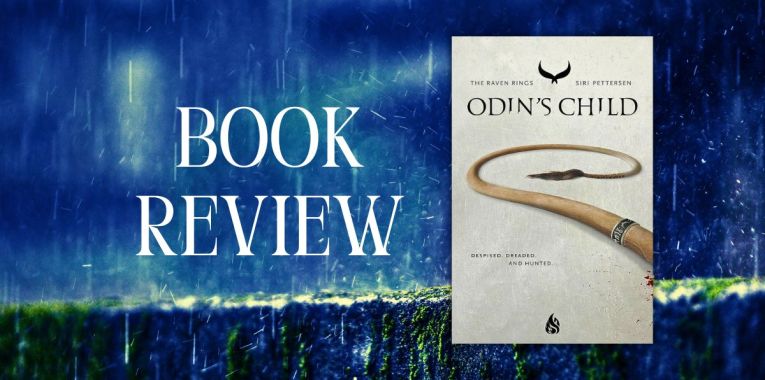
Book Review: ‘Odin’s Child’ by Siri Pettersen

Siri Pettersen’s ‘Odin’s Child’ is book thirty-one of the year (I made a counting error in my last review!).

I recently joined a book club here in Innsbruck. We first met in August to discuss some short stories, and ‘Odin’s Child’ was the first full-length novel we read. We will meet later in September, and I look forward to discussing it with the group.

Seeing as fantasy generally isn’t my cup of tea—with obvious exceptions, such as ‘Lord of the Rings’—I was dubious. But, as it turned out, I enjoyed ‘Odin’s Child’. I didn’t love or hate it (as I sometimes do with fantasy). Pettersen sidesteps some fantasy errors whilst succumbing to others.

The story follows Hirka, a tailless girl in a world where having a tail is the norm. She also can’t “bind”—the codeword for magic in this universe—whereas everyone else can. The usual fare of the “orphaned special one” begins, and worldbuilding clogs up the story. But once Pettersen gets most of that out of her system, the story is fun and fast-paced. I didn’t feel that the novel dragged with extraneous details once we got rolling. Except for a rather unnecessary attempted sexual assault, the tale was entertaining.

So, for someone who dislikes most fantasy, I had a good time with ‘Odin’s Child’. I am still determining whether I will read books two and three in the series. It’s not Pettersen’s fault that this genre isn’t for me, but I must be honest about how much I liked it. I may pick them up to see where Pettersen takes the story from here.

If you dig fantasy, you may love ‘Odin’s Child’; if you dislike the genre, you might like it anyway, like me.